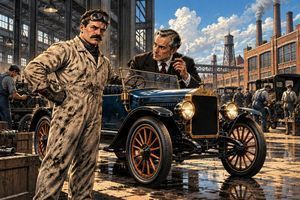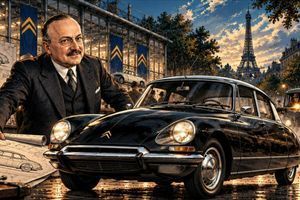

Jean Bugatti was the son of the marque's founder, Ettore Bugatti, and the engineer and designer who created the legendary Bugatti Type 57SC Atlantic. He ran the factory in Molsheim (Alsace) from the age of twenty-seven. Under his leadership Bugatti won Le Mans twice. He died on 11 August 1939 during a test drive, at the age of thirty, while swerving to avoid a cyclist. His personal black Atlantic vanished during the war and has still not been found.

In this story:
- Who Jean Bugatti was and why he is called a genius in a family of geniuses
- What the Bugatti Royale is and why no king bought a car made for kings
- How Jean Bugatti took charge of the Molsheim factory
- Who created the Bugatti Atlantic and where its riveted spine came from
- How many times Bugatti won Le Mans under Jean Bugatti
- How Jean Bugatti died
- What happened to Jean's black Bugatti Atlantic
- What happened to Bugatti after the deaths of Jean and Ettore
Who Jean Bugatti was and why he is called a genius in a family of geniuses
This story begins at the end. An August night, a straight road near Molsheim, a blue streamlined racer that has just won Le Mans. Behind the wheel is a thirty-year-old man who has just proved to his father everything he wanted to prove. We will come back to the finale. First, let's see where he came from.

Jean was born in Cologne, where his father was then working for the engine maker Deutz. That same year Ettore Bugatti would found his own company in Molsheim, Alsace. So the boy and the factory are the same age.
In this family, everyone was a genius. His grandfather, Carlo Bugatti, made Art Nouveau furniture that Paris admired. His uncle, Rembrandt Bugatti, sculpted bronze animals so lifelike that he is considered one of the finest animal sculptors of his time. His father, Ettore, built cars that were called art on wheels.

We told this story of father and son in 3 minutes. Watch it before reading on.
The boy draws car bodies in the margins of his notebooks. And, as the story goes, he constantly feels one thing: that he is only a son. Legend has it that he gave himself his word that one day people would say not "a Bugatti car" but "Jean's car."

What the Bugatti Royale is and why no king bought a car made for kings
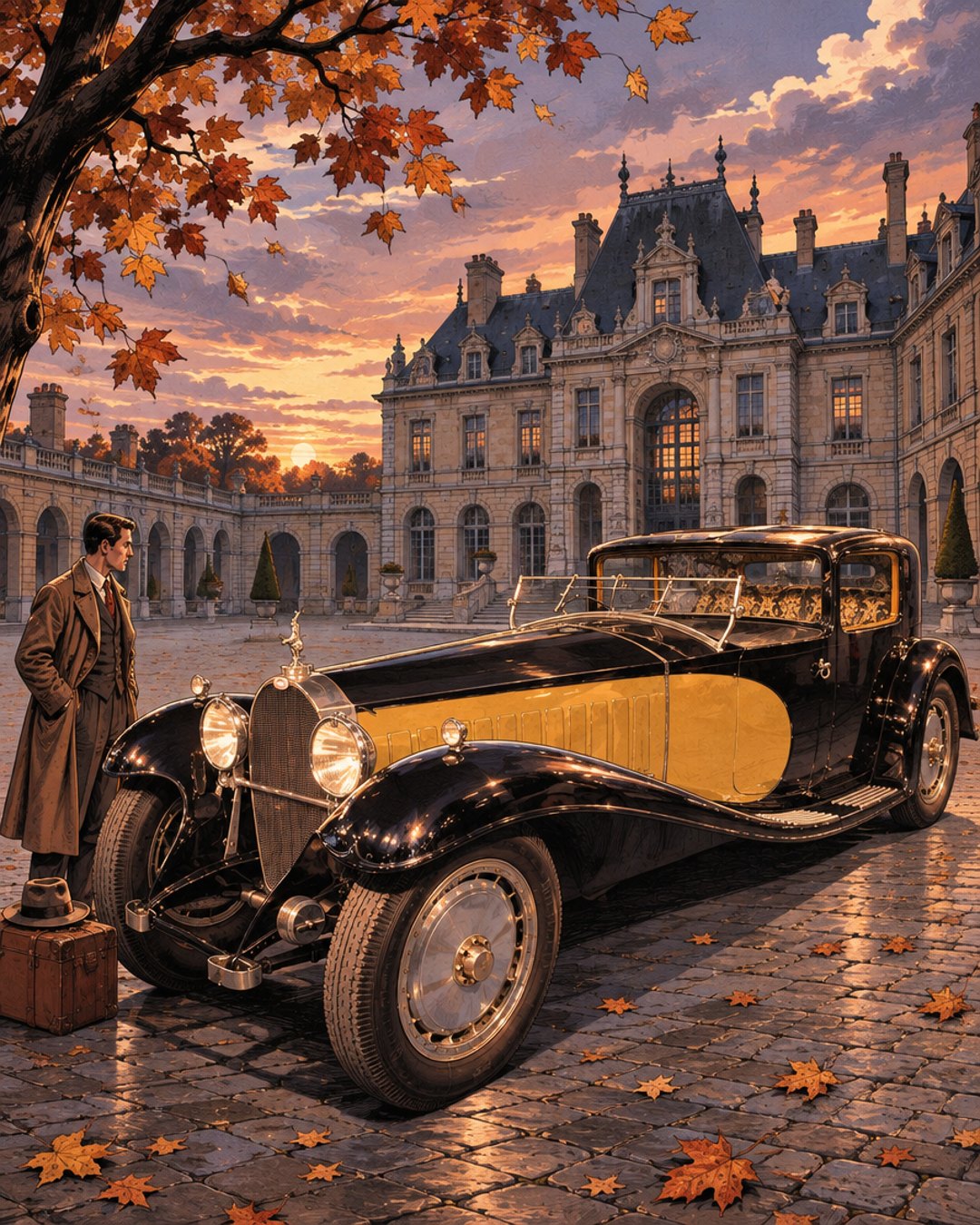
Ettore dreamed of something else: a car worthy of monarchs. That is how the Bugatti Type 41 Royale was born: more than six meters long, with a straight-eight engine of almost thirteen liters. On the radiator sits a silver elephant, modeled on a sculpture by his late brother Rembrandt.

At twenty-three, Jean draws one of the bodies for the giant: an open roadster that would later be called one of the most beautiful Royales. This is no longer a notebook margin. It is a blueprint for a car meant to carry kings.
But the world is sliding into the Great Depression. Spain's King Alfonso XIII is toppled from his throne. Romania's Carol II never receives his car. And King Zog of Albania, according to legend, was turned down by Ettore himself, supposedly over his dreadful table manners. No one can prove whether that is true, but the story has lived on for almost a century.

How Jean Bugatti took charge of the Molsheim factory
Three years before Jean's death, a strike sweeps the Molsheim factory, as all of France is seething at the time. Ettore takes it as a personal insult, goes to Paris and effectively leaves his twenty-seven-year-old son to run production.
What Jean had dreamed of since childhood came about not through triumph but through a quarrel. And he does not waste a single day.

Who created the Bugatti Atlantic and where its riveted spine came from
The Bugatti Atlantic was created by Jean Bugatti on the Type 57 chassis. Low, like a drop of mercury, with oval windows and kidney-shaped doors, it looks today as if it had arrived from the future.
Its most famous detail is the ridge of rivets running along the entire back. The prototype was made of Elektron magnesium alloy: light, but practically impossible to weld without risk of ignition. So the panels were joined with rivets on the outside. The production cars were made of aluminum, but the ridge was kept, and the flaw became a signature.

Car data sheet
| Parameter | Value |
| Model | Bugatti Type 57SC Atlantic |
| Designer | Jean Bugatti |
| Years of production | 1936–1938 |
| Engine | 3.3 L supercharged straight-eight |
| Body material | prototype: Elektron magnesium alloy; production cars: aluminum |
| Production run | 4 cars, 3 survive |

How many times Bugatti won Le Mans under Jean Bugatti
Jean's second brainchild was the streamlined Type 57 racer, nicknamed the "Tank" for its massive shape. It brought Bugatti victory at Le Mans twice: first with Jean-Pierre Wimille and Robert Benoît, then with Wimille and Pierre Veyron. Yes, the same Veyron whose name would be given to a hypercar decades later.


How Jean Bugatti died
Less than two months after the second victory, Jean takes the winning "Tank" out for a test run. It is late evening on 11 August 1939, on a straight road near Molsheim. The blue racer flies through the darkness.
A cyclist emerges onto the road from a gap in a hedge. Jean yanks the wheel to avoid hitting him, and the car crashes into a tree. He dies on the spot. He is thirty. That is the ending this story began with.

What happened to Jean's black Bugatti Atlantic
Ettore, they say, never recovered. A few weeks later the war begins, and the factory in Alsace is under threat. Part of the cars and equipment are evacuated. Jean's black Atlantic, according to the most widespread version, is sent by rail toward Bordeaux, and no one has seen it since.

Since then the missing Atlantic has become one of the greatest mysteries of the automotive world. Treasure hunters have searched barns, cellars and tunnels. All in vain.


What happened to Bugatti after the deaths of Jean and Ettore
Without Jean, the marque never regained its former strength. Ettore outlived his son by eight years, hoping until the end to start the factory up again. After his death the company faded, and a decade and a half later the family sold it to the aircraft engine firm Hispano-Suiza. Since then the Bugattis have held no stake in the company. It was not until the end of the century that the Volkswagen Group gave the marque new life.
Timeline
| Year | Event |
| 1909 | Jean Bugatti is born; Ettore founds his company in Molsheim |
| 1932 | Jean designs a roadster body for the Bugatti Royale |
| 1936 | Strike at the factory, Jean effectively takes charge of production; the Atlantic appears |
| 1937 | The Bugatti Tank's first victory at Le Mans |
| 1939 | Second victory at Le Mans; on 11 August Jean dies during a test drive |
| 1947 | Ettore Bugatti dies |
| 2019 | Bugatti unveils La Voiture Noire, a tribute to the missing Atlantic |

Jean's Atlantic was almost a capsule: a low roof, tiny oval windows, the engine right beside you, and the driver breathed whatever the cabin let through. Today's car is just as enclosed, only instead of Alsatian roads there are city traffic jams, exhaust and highway odors. A Bugatti in the garage is a rarity, but a Volkswagen, Audi, Škoda or Seat from the group that revived the marque is entirely ordinary.
For them there are Carbon Series cabin filters with activated carbon: they trap dust, while the carbon layer absorbs odors, so there is something to breathe in the cabin.
Carbon Series for Volkswagen: DCF2063 · DCF2041 · DCF2088
Find a DEIMAN filter for your car →
The father built cars for kings, and the kings never bought them. The son made a car for himself, and it vanished. But Jean did keep the promise he made in childhood: when someone talks about the Atlantic today, they say not "a Bugatti car" but "Jean's car." He remained thirty forever, and he remained forever the author of the most beautiful line in the marque's history.
In the next episode of "The Birth of Automotive Legends": a new family, a new car and a new price of a dream. And what do you think: will the black Atlantic ever be found, and is it worth looking for?

Frequently asked questions
Who was Jean Bugatti?
Jean Bugatti was the elder son of the marque's founder, Ettore Bugatti, and an engineer and designer. He was born in 1909 in Cologne, drew bodies for the Bugatti Royale, created the Type 57SC Atlantic and the Type 57 "Tank" racer, which won Le Mans twice. From the mid-1930s he effectively ran the factory in Molsheim. He died in 1939 at the age of thirty.
How did Jean Bugatti die?
Jean Bugatti died on 11 August 1939 near Molsheim in Alsace. Late in the evening he was testing the Bugatti Type 57 "Tank," which had won Le Mans less than two months earlier. A cyclist emerged onto the road from a gap in a hedge, Jean swerved, and the car hit a tree. He died on the spot.
How many Bugatti Atlantics were made?
Only four production Bugatti Type 57SC Atlantics were built, between 1936 and 1938. They were preceded by a prototype made of magnesium alloy. Three Atlantics survive and belong to private collectors and a museum, while the fourth, Jean Bugatti's black personal car, disappeared at the start of the Second World War.
Why does the Bugatti Atlantic have a riveted seam on its body?
The Atlantic prototype had a body made of Elektron magnesium alloy. It is light but welds poorly and can ignite during welding. So the panels were joined with rivets on the outside, forming a ridge along the roof and fenders. The production cars were made of aluminum, but the seam was kept as a signature styling detail.
Where is Jean Bugatti's black Bugatti Atlantic now?
No one knows. The most widespread version is that at the start of the Second World War the car was evacuated from Molsheim by rail toward Bordeaux, after which its trail goes cold. The missing black Atlantic is considered one of the most valuable lost cars in the world, and it is still being searched for.
How many Bugatti Royales were built and who were they sold to?
Six examples of the Bugatti Type 41 Royale were built. Ettore Bugatti conceived the car for monarchs, but because of the Great Depression only three were sold in his lifetime, to wealthy private clients. No Royale went to a king, although the rulers of Spain, Romania and Albania are mentioned among potential buyers.
Why did Bugatti Royale engines power trains?
The Royale sold poorly, and the factory was left with finished or partly made engines: straight-eights of almost thirteen liters. Ettore found a use for them: Bugatti began producing high-speed railcars for the French railways, and these engines were fitted to them.
What is the Bugatti La Voiture Noire?
La Voiture Noire ("The Black Car") is a one-off Bugatti hypercar shown in 2019 at the Geneva Motor Show. It is a tribute to Jean Bugatti's missing black Atlantic: the car has a similar ridge along its body and a black finish. It was built as a single example for a private buyer.
How many times did Bugatti win Le Mans before the war?
Before the Second World War, Bugatti won the 24 Hours of Le Mans twice, in 1937 and 1939, both times with the streamlined Type 57 "Tank" developed under Jean Bugatti's direction. In 1937 the crew of Wimille and Benoît won, and in 1939 Wimille and Pierre Veyron.
Who created the elephant on the Bugatti Royale's radiator?
The elephant figure for the Bugatti Royale was based on a sculpture by Rembrandt Bugatti, Ettore's younger brother and Jean's uncle. Rembrandt was a renowned animal sculptor who worked in bronze and died long before the Royale appeared. The elephant on the radiator became a tribute to his brother's memory.
Does the Bugatti family own Bugatti today?
No. After Ettore Bugatti's death in 1947 the company declined, and in 1963 it was sold to Hispano-Suiza. Since then the Bugatti family has held no stake in the company. The marque was later revived by other owners, but the founders' name lives on only in the brand name and in legends.