
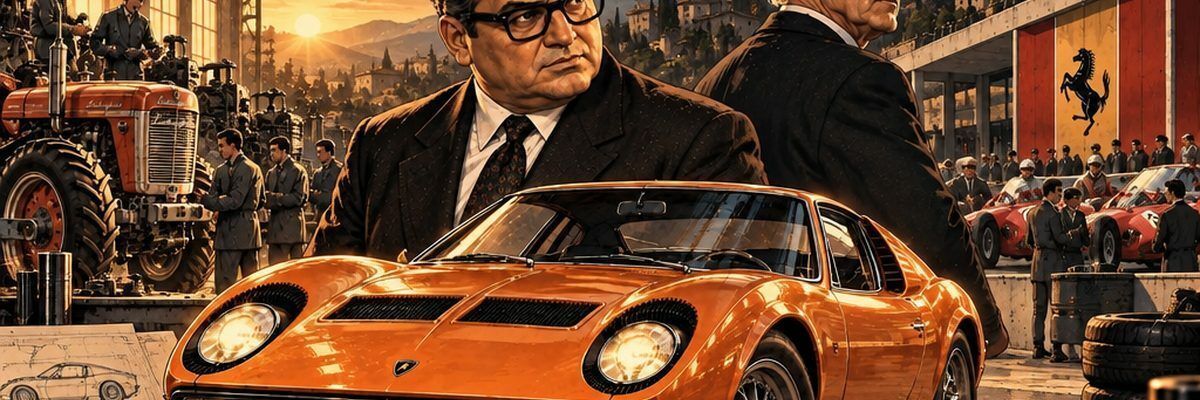
"…Stick to your tractors" — that, according to Ferruccio Lamborghini, is how Enzo Ferrari answered him. Then he turned away. Italy's richest tractor maker walked out of the office in Maranello humiliated — and a few years later unveiled a car that left the whole world breathless. This is the story of Lamborghini: of loss, an insult, a bull on the badge and a last phrase Ferruccio could never forget.
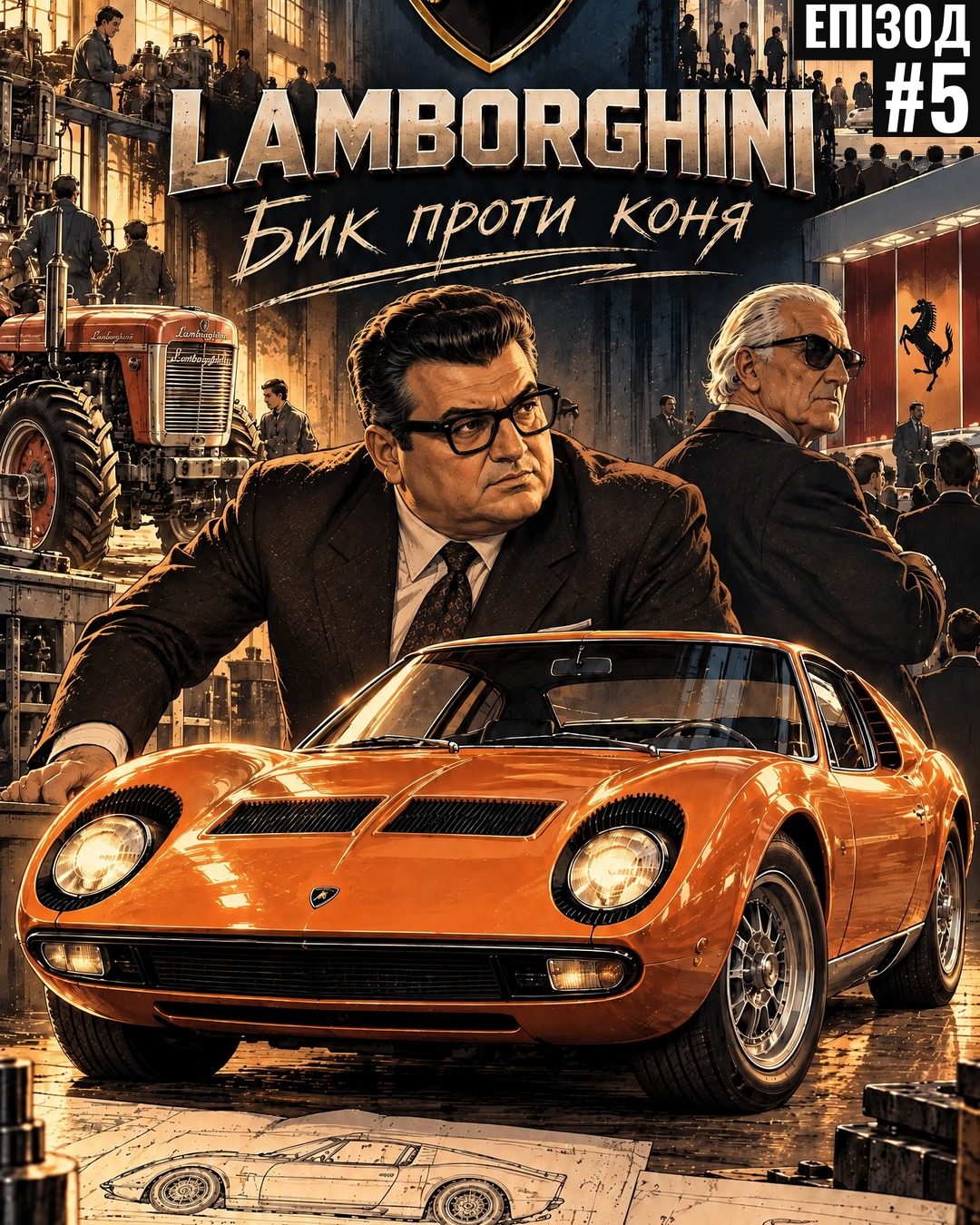
In this story:
- One phrase in Maranello that cost Ferrari its peace
- A man who already knew the price of loss
- The clutch that started the Lamborghini story
- A bull a few dozen kilometres from the horse
- Lamborghini Miura: a car named after Spain's fiercest bulls
- How the bull ran away from its master
One phrase in Maranello that cost Ferrari its peace
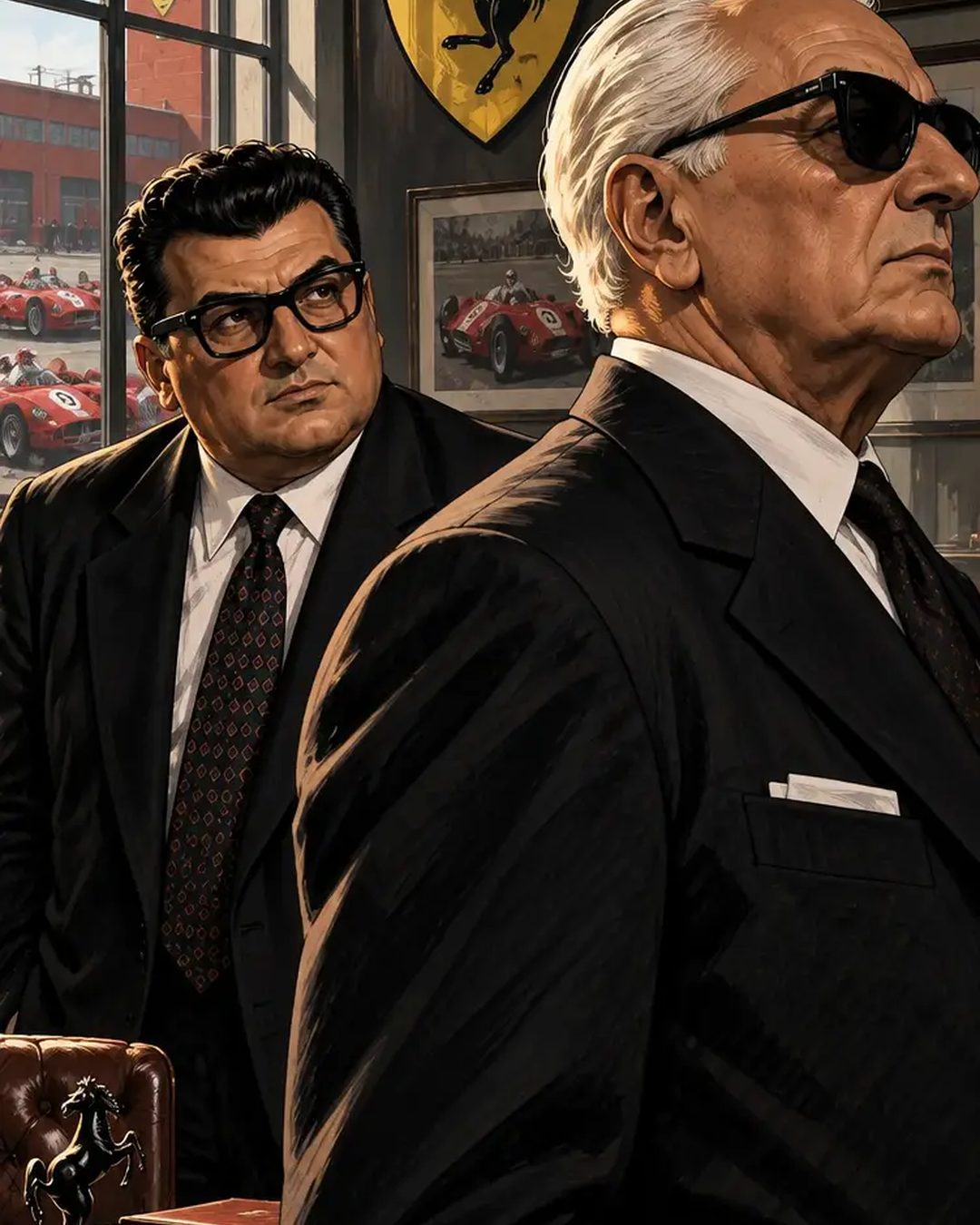
Maranello, 1963. Ferruccio Lamborghini did not come to Enzo Ferrari to complain, but to talk as one master to another. He had a problem with the car — and he knew how to fix it.
The answer, if we believe Ferruccio himself, took just a few words. The conversation was shorter than the drive to Maranello. There is no written record, so what we have is a legend Lamborghini retold to journalists for years. But it gave birth to one of the loudest names in the car world.
To understand why those words hurt so much, we need to go back two decades. Back then Ferruccio had no money, no factories and no Ferrari. All he had was the experience of loss — and after loss, an insult sounds very different.
A man who already knew the price of loss
Ferruccio was born into a farming family near Ferrara. Rather than plough the land, he preferred to tinker with engines. The war sent him to the island of Rhodes as an air-force mechanic, where he was taken prisoner by the British. He came home no longer a young man.
Clelia Monti was waiting for him. They married, a child was on the way, and it seemed the worst was behind them.
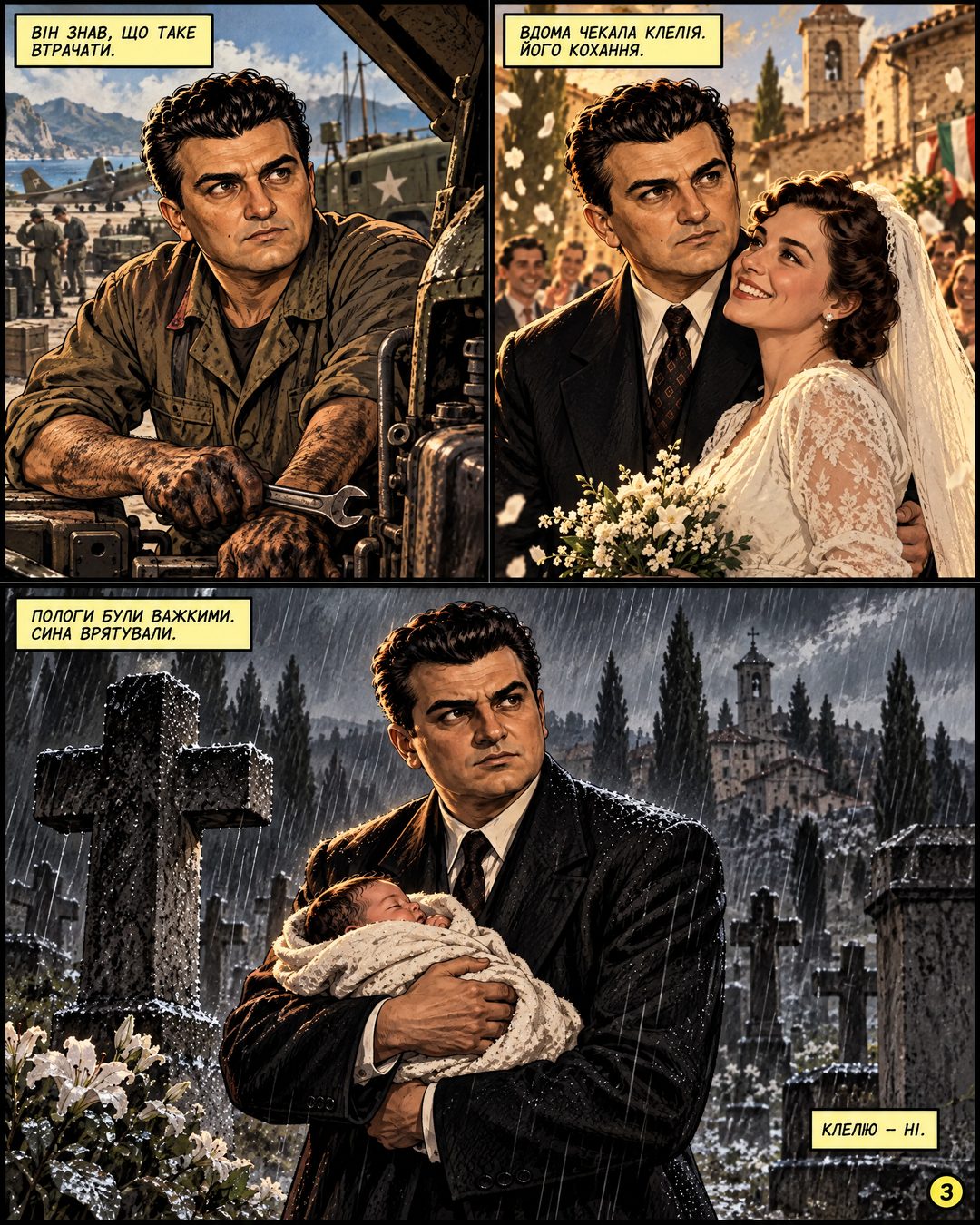
The boy was named Tonino. A thirty-year-old widower was left with a newborn in his arms and no plan at all. Tonino Lamborghini would later become an entrepreneur himself and carry his father's name into fashion and design. But back then the house held only a baby's cry and silence.
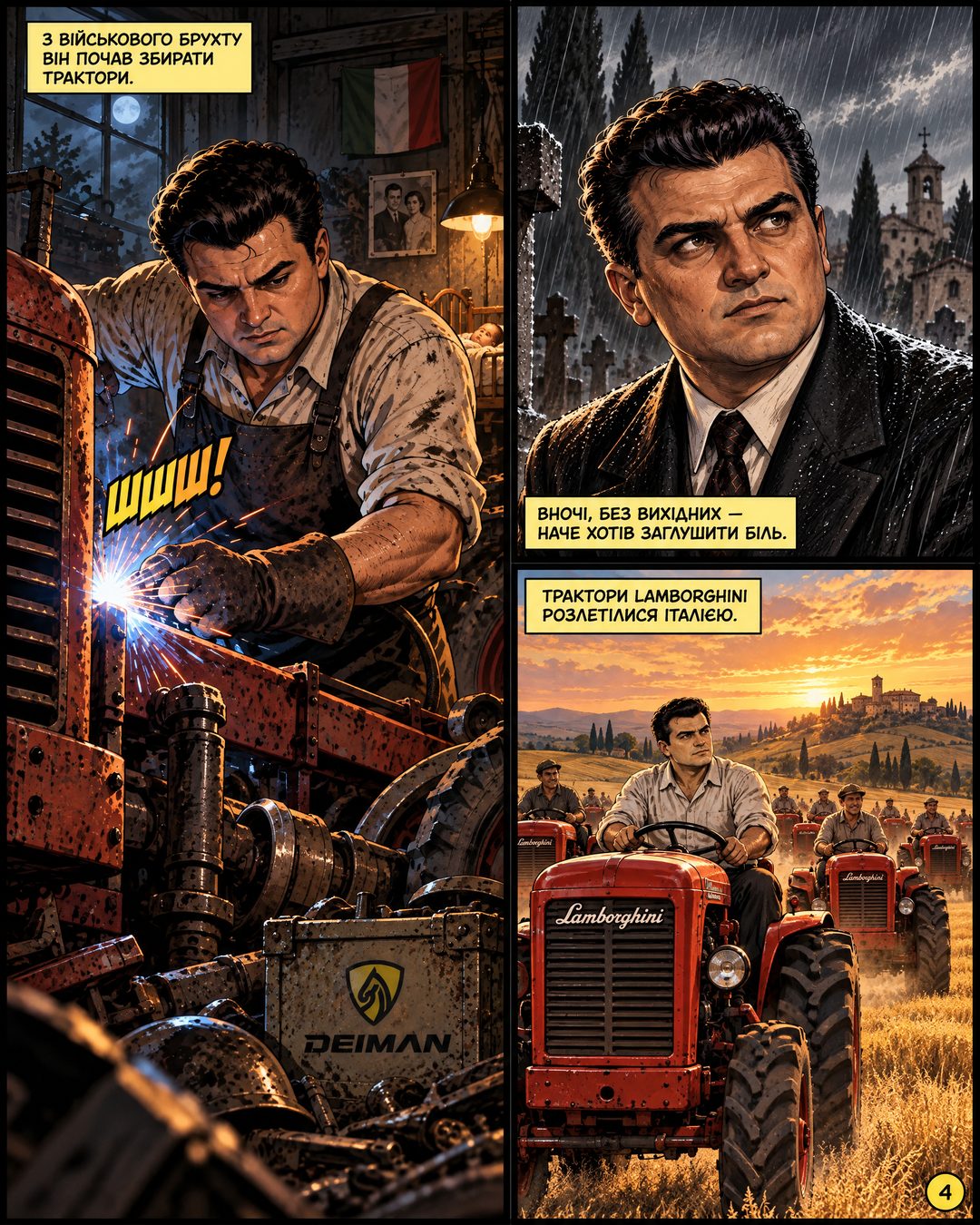
After the war, Italy was littered with tonnes of decommissioned military equipment: trucks, engines, gearboxes. To most people it was scrap. Ferruccio saw spare parts.
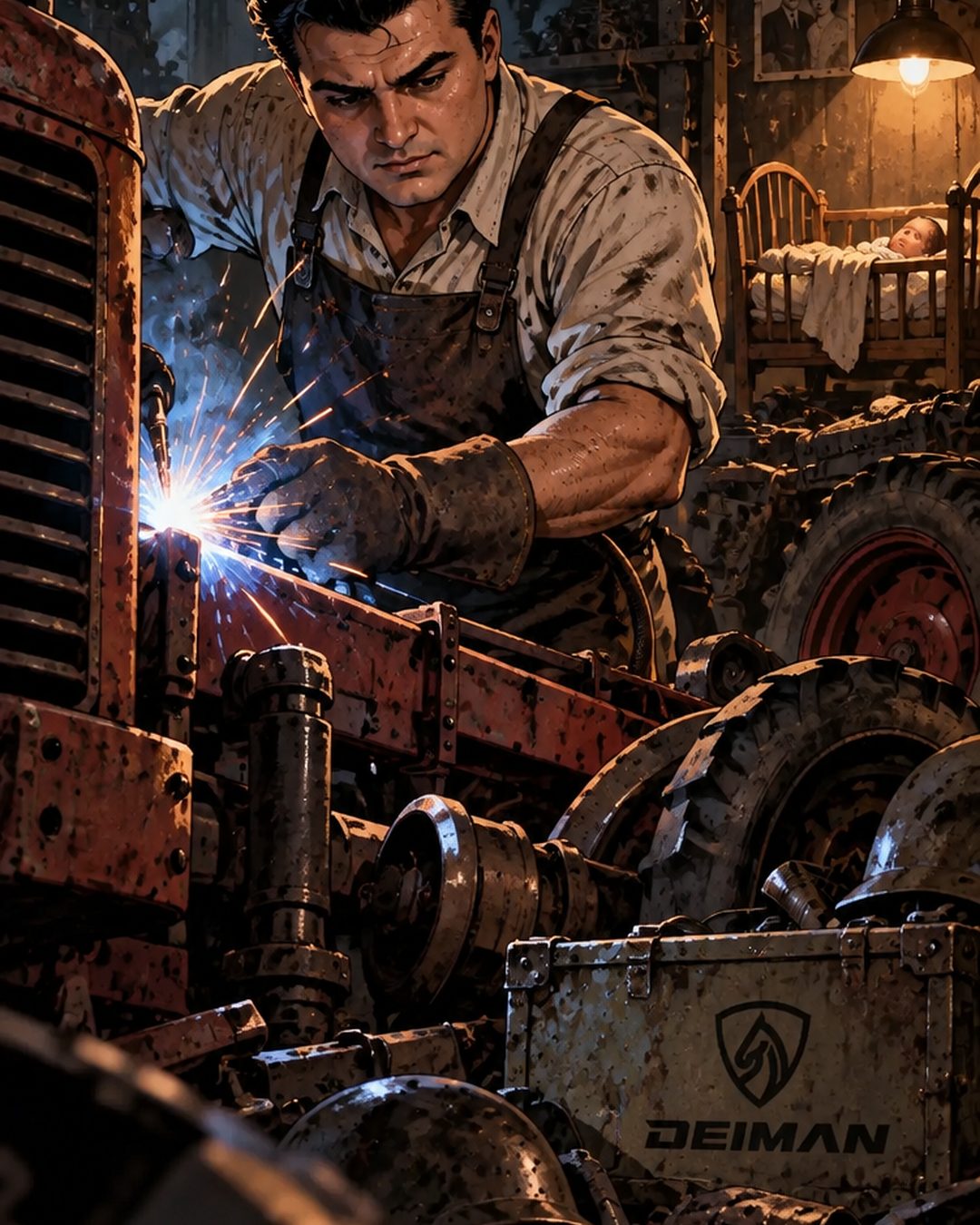
The first Lamborghini tractors were built from converted army components. They were cheap, tough and easy for a farmer to understand. Demand grew so fast that the workshop became a factory, and the factory one of the notable players in the Italian tractor market.
We told this story in two and a half minutes. See how it looked on screen — from the office in Maranello to the vineyards.
▶ Episode video coming soon
The clutch that started the Lamborghini story
His wealth let Ferruccio buy what every Italian man dreamed of: a red Ferrari. Among his cars was a 250 GT — fast, beautiful and full of character. That character, however, did not show only on the road.
The clutch burned out again and again. Repairs at the dealer took long and cost a lot. So the mechanic who had built thousands of tractors did what he did best: he drove the car into his own workshop and took it apart.
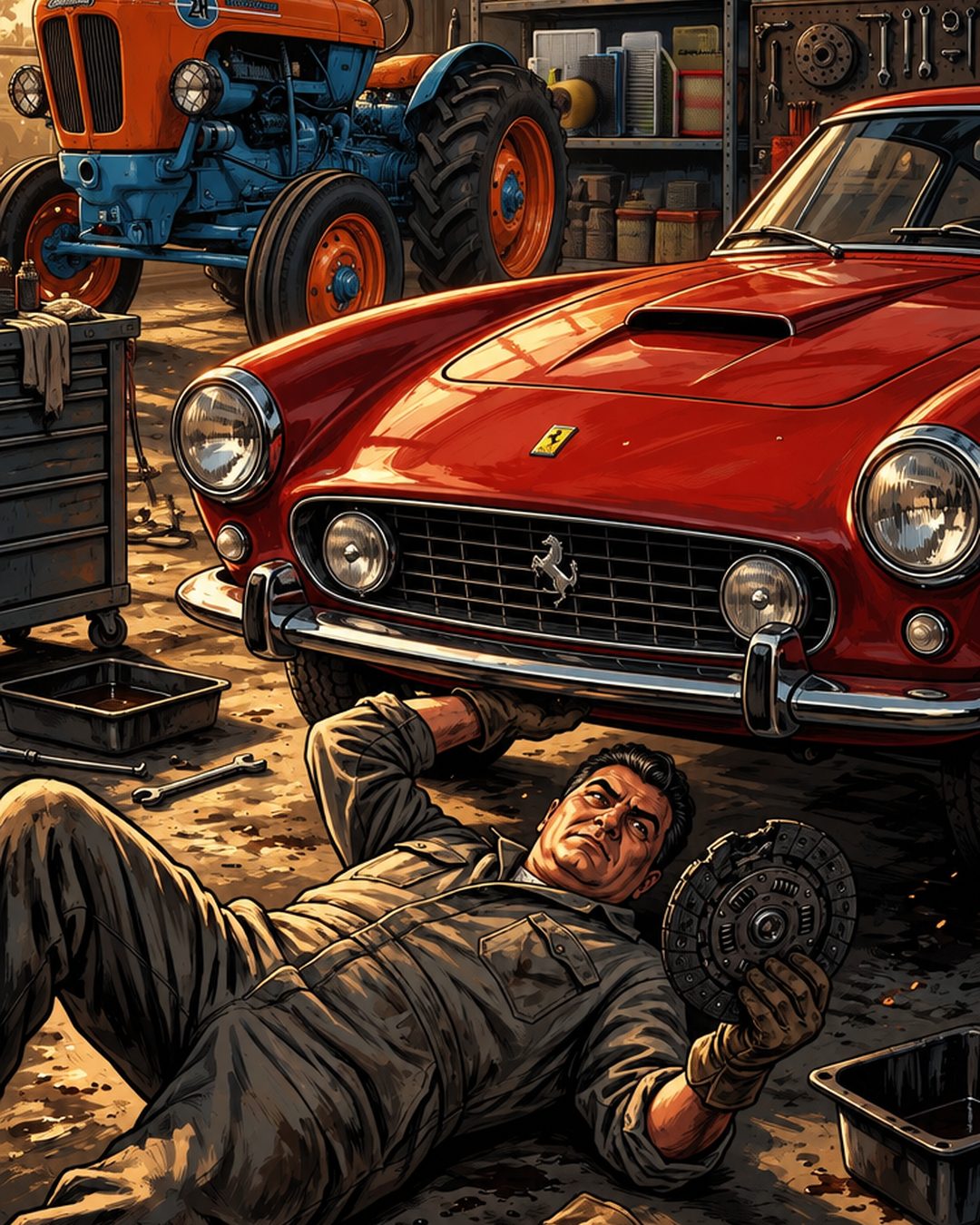
It was with this discovery that he went to see Enzo. He wanted to offer a solution — and was advised to go back to his tractors. For a man who had built a factory out of scrap, it felt like a slap in the face.
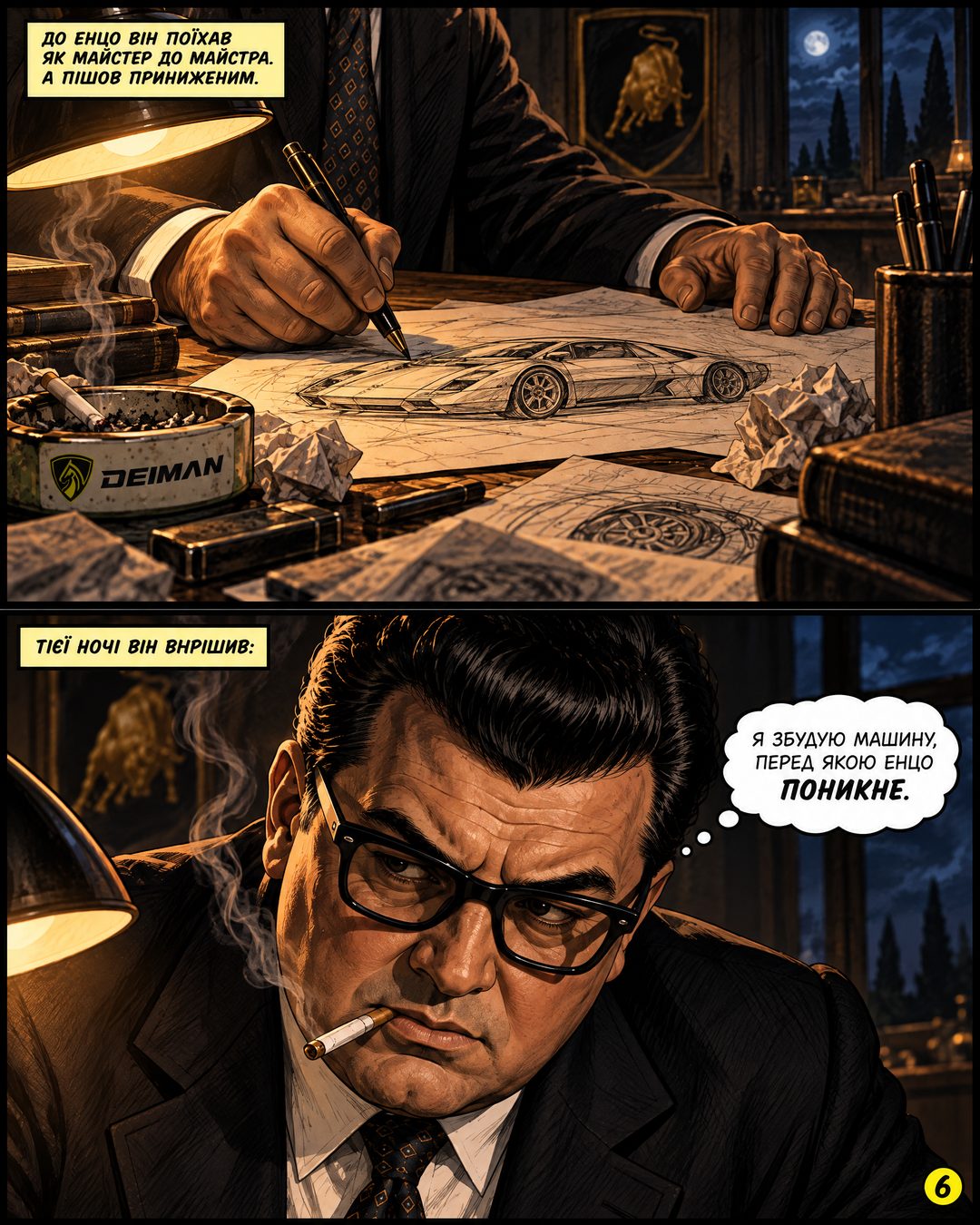
Ferruccio did not want just a fast car. He wanted a gran turismo you could drive across half of Europe without a breakdown: comfortable, reliable, properly finished. In other words, what in his view a Ferrari was not.
A bull a few dozen kilometres from the horse
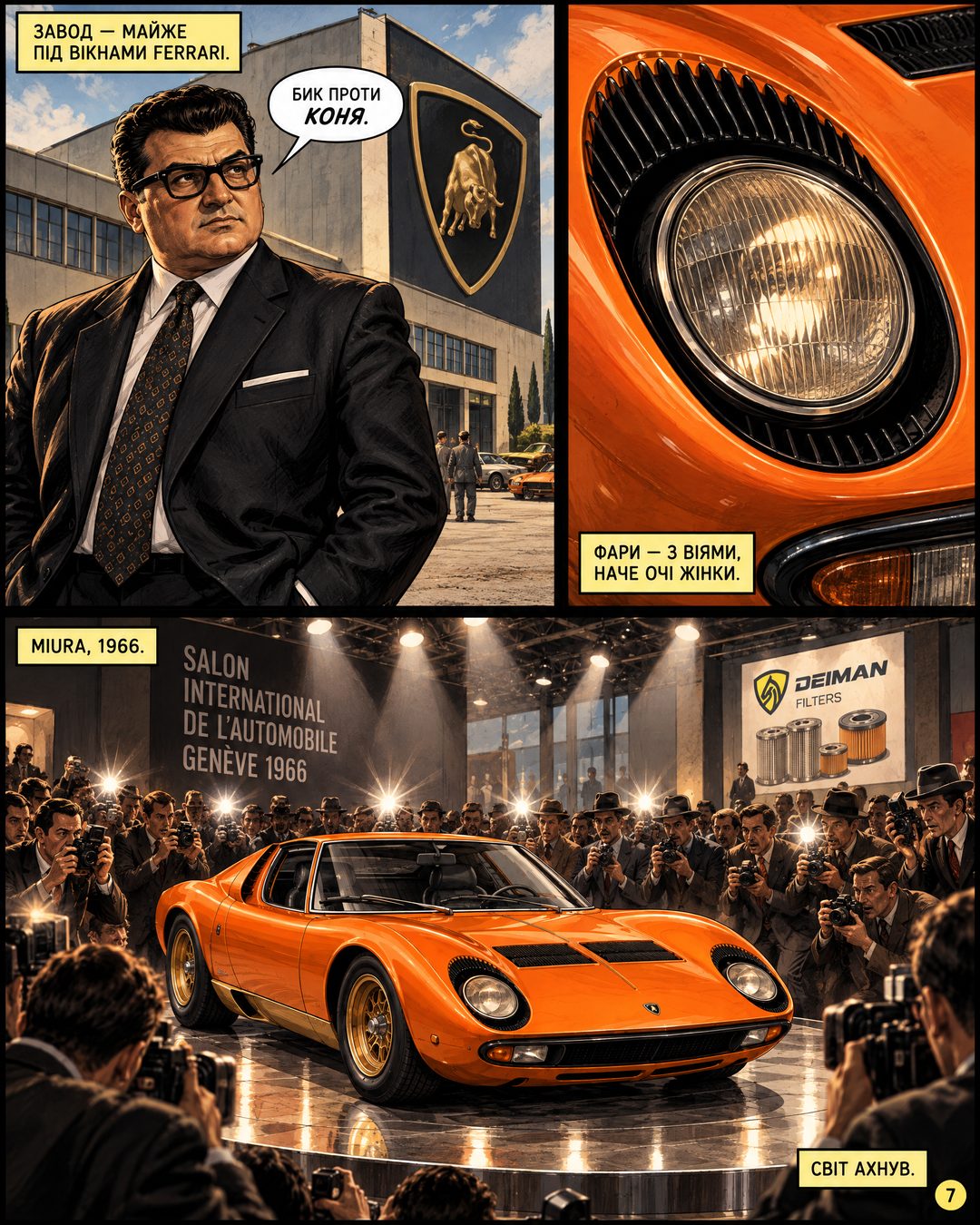
He built his factory in Sant'Agata Bolognese, a few dozen kilometres from Maranello. That proximity was hardly an accident. The rival had to see that the answer was right next door.
The first prototype was shown to the public that same year. It was handsome but coolly received: critics attacked both the design and the engineering. The production model that followed sold modestly. It seemed Enzo had been right.
The drawings made in secret
The turn came from where no one expected. The factory's young engineers — Gian Paolo Dallara, Paolo Stanzani and New Zealander Bob Wallace — spent their evenings on a project of their own: a chassis with the engine not in front, but behind the driver, like a racing car.
Ferruccio did not care for racing and, by the common account, saw the project mostly as loud publicity. But he looked at the drawings and gave the go-ahead. The body was entrusted to the Bertone studio, where it was drawn by a young Marcello Gandini.
Lamborghini Miura: a car named after Spain's fiercest bulls
Ferruccio loved bullfighting. He travelled near Seville to Don Eduardo Miura, whose family had bred fighting bulls for over a century — bulls that even matadors feared. That family name became the name of the car.
In 1966, at the Geneva Motor Show, the Miura rolled into the spotlight. Low like a predator about to pounce, with "eyelashes" around its headlights that you could not look away from. Next to it, even the newest Ferraris suddenly looked like yesterday's cars.
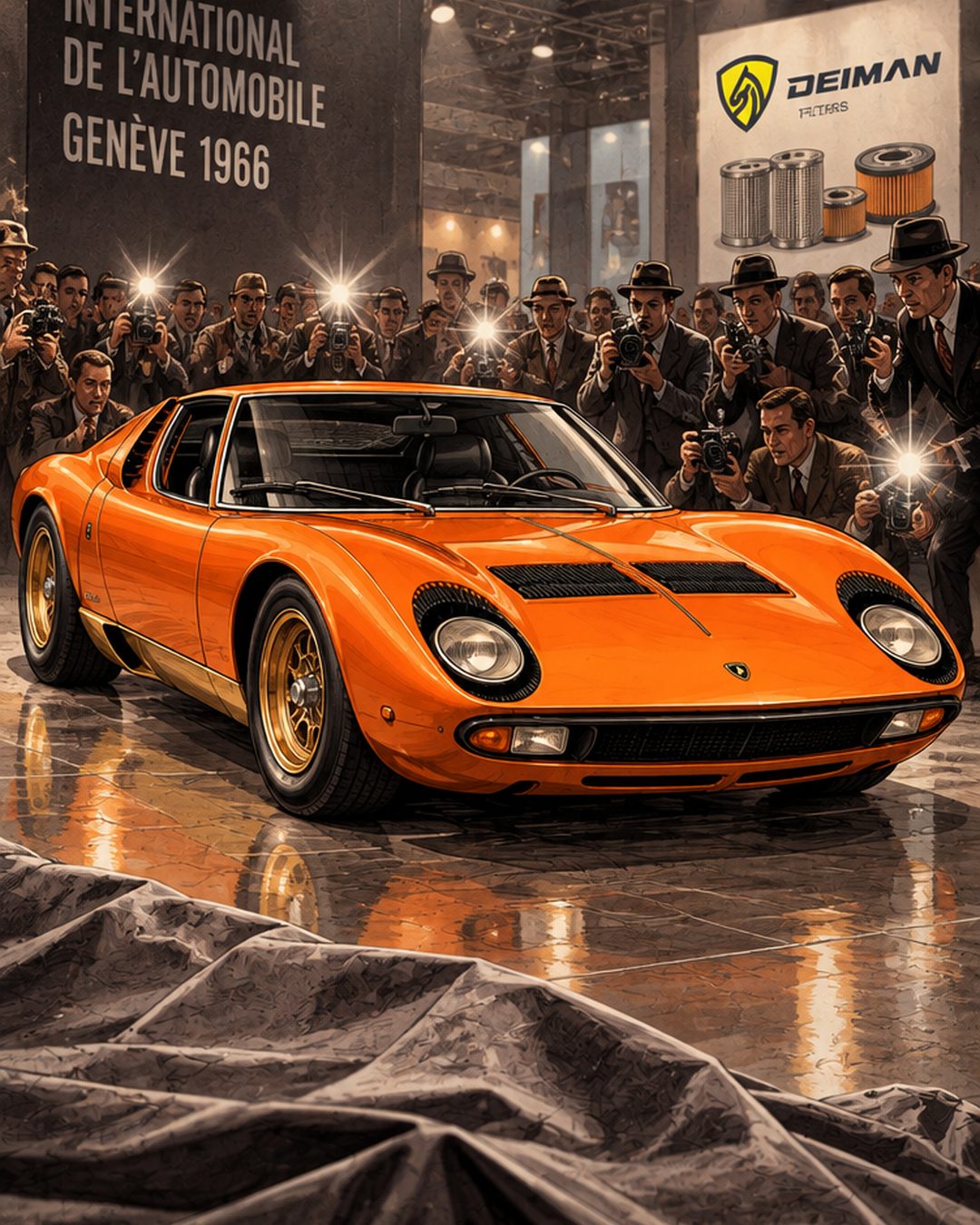
Car passport
| Parameter | Value |
| Model | Lamborghini Miura P400 |
| Production years (all Miura versions) | 1966–1973 |
| Engine | V12, 3.9 L, transverse behind the seats |
| Power | 350 hp |
| Design | Marcello Gandini, Bertone |
| Debut | Geneva Motor Show, 1966 |
This beauty had a downside too. The V12 sat right behind the occupants' backs. The cabin was hot and loud, and the smells of hot metal and fuel lived a life of their own in there. Miura owners forgave it all: for a car like that, you put up with anything.
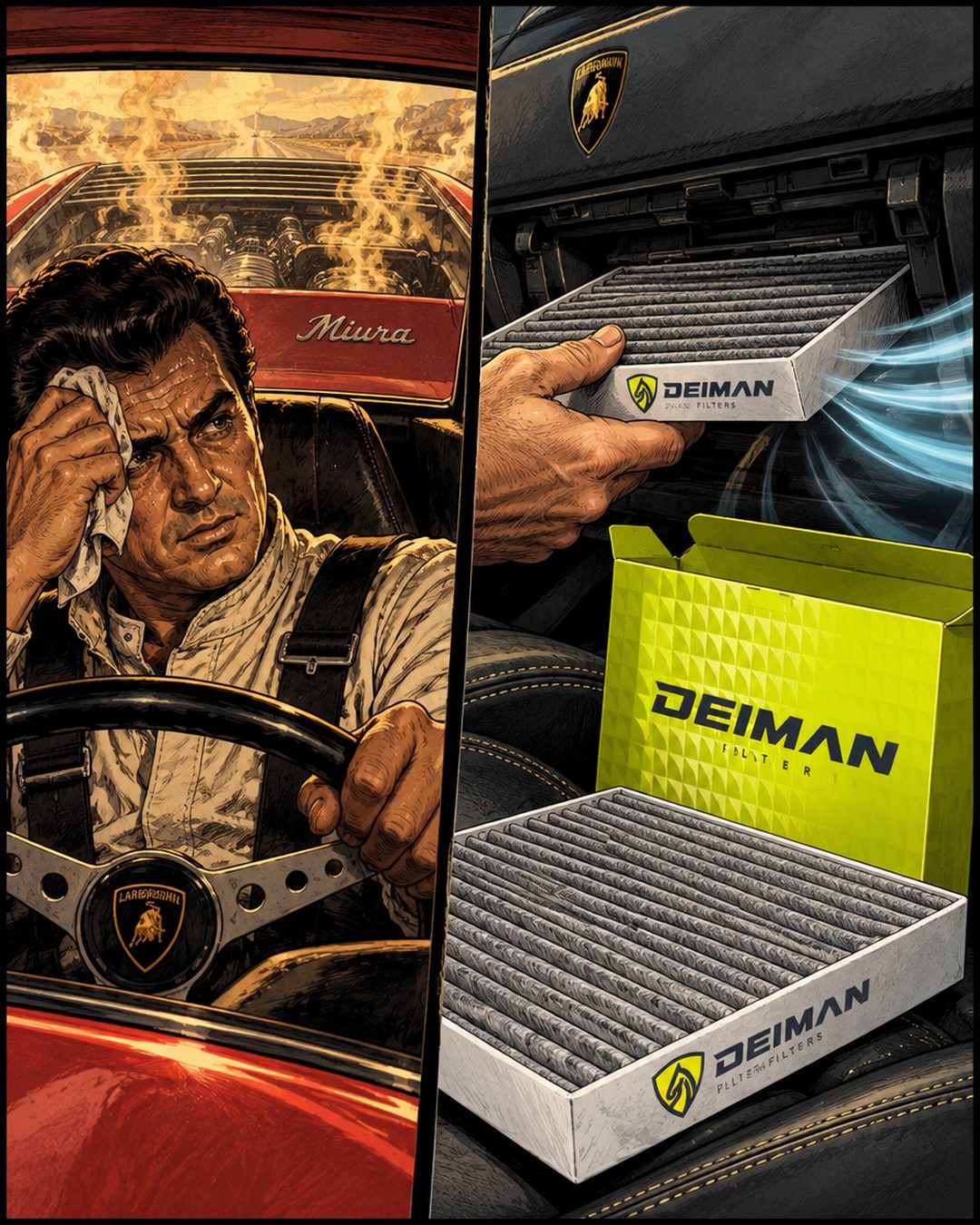
Today there is no need to put up with it. But the air in a traffic jam has not gone anywhere: along with the heat, dust, exhaust from the truck next to you and fine rubber particles from the asphalt flow through the vents. Whatever the filter does not stop, the driver and passengers breathe in.
That is exactly why DEIMAN makes Ultra cabin air filters using nanocrystalline technology: so the air inside the car is cleaner than outside.
Find a DEIMAN filter for your car →
How the bull ran away from its master
Ferruccio did not stay at the top for long. In the early seventies Italy was hit by strikes and an economic crisis. By the common account, a large tractor order from Bolivia fell through, and debts hit the tractor business.
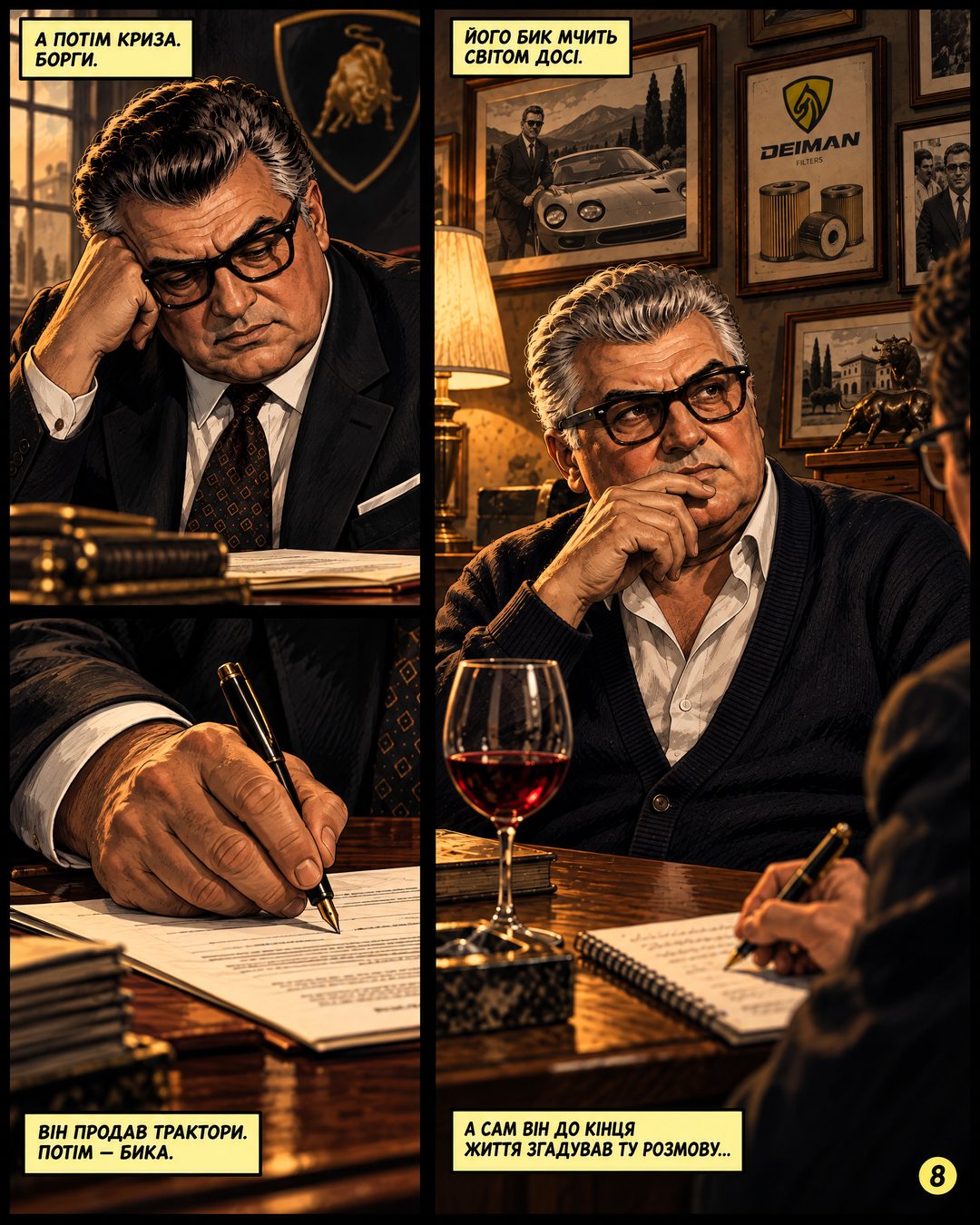
Tractor production went to SAME. He sold his stakes in the car company to Swiss investors Georges-Henri Rossetti and René Leimer. Later the brand would be bought by Chrysler, and at the end of the nineties it ended up at Audi, where it remains today.
Ferruccio himself moved to Umbria, to Lake Trasimeno, and took up winemaking. The man who had stunned the world with V12 engines now waited for the harvest.
Ferruccio Lamborghini died at seventy-six. His bull still charges across the world, and every new Lamborghini, low and defiant, continues that argument in Maranello. To the very end he kept telling journalists exactly what Enzo Ferrari had said to him. You already know those words: "…stick to your tractors". Perhaps the most expensive piece of advice in automotive history.
In the next episode of "Birth of Auto Legends" — another brand with a person behind it, not just a logo. Subscribe so you don't miss it. And tell us in the comments: whose side are you on — the bull's or the horse's?
The whole story as a comic
9 pages · Swipe sideways →
 1 / 9
1 / 9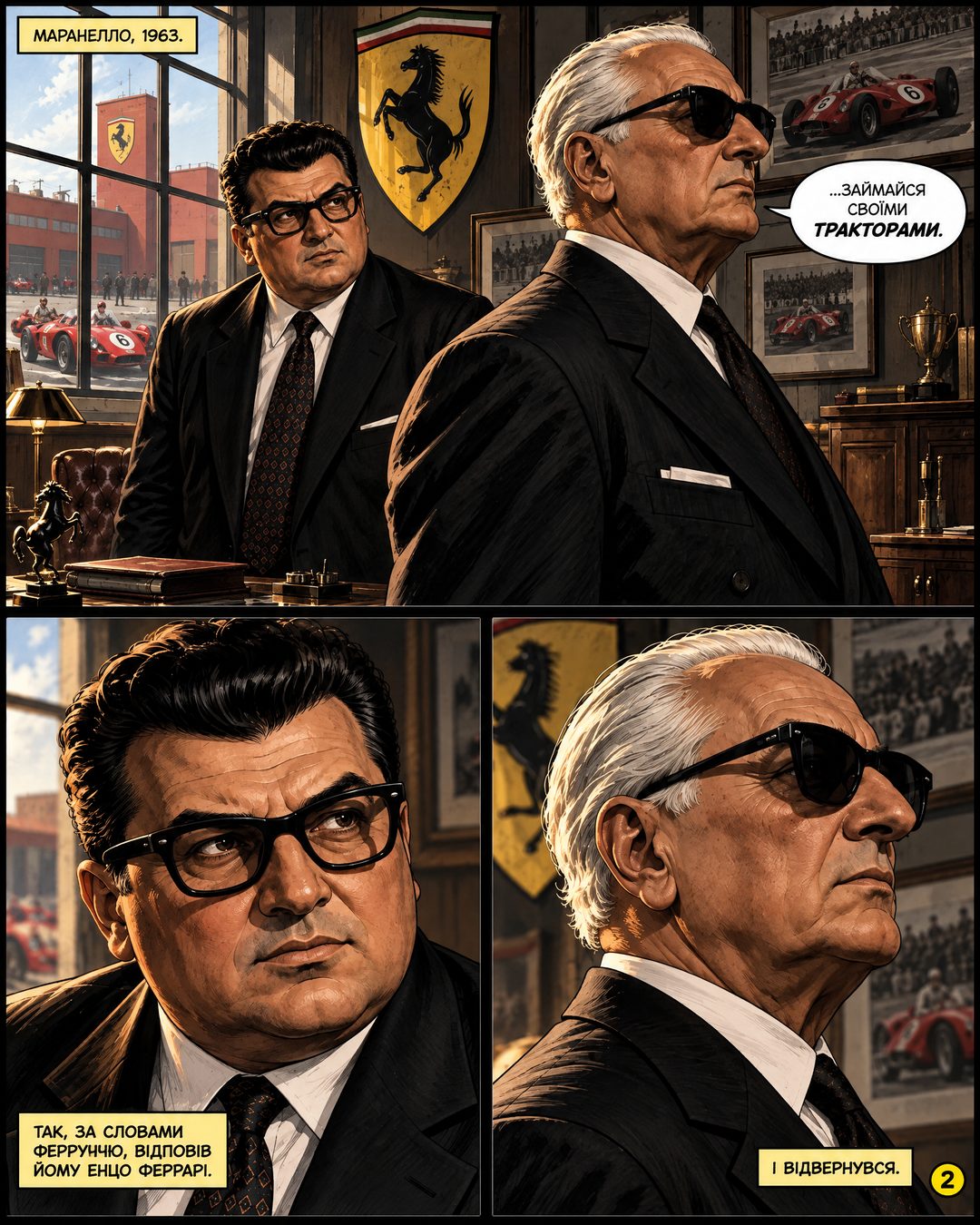 2 / 93 / 9
 4 / 9
4 / 9 5 / 96 / 9
 7 / 98 / 9
 9 / 9
9 / 9Frequently asked questions
Why did Ferruccio Lamborghini fall out with Enzo Ferrari?
According to Ferruccio himself, the clutch on his Ferrari kept burning out, and he came to Enzo with a suggestion on how to fix it. Ferrari allegedly told him to stick to tractors. There is no documentary evidence of this conversation, but it became the legend behind the founding of Automobili Lamborghini in 1963.
Why is there a bull on the Lamborghini badge?
Ferruccio Lamborghini was born on 28 April 1916, which made him a Taurus. He was also a fan of bullfighting. The bull on the badge became a symbolic answer to Ferrari's prancing horse.
Where does the name Lamborghini Miura come from?
The car is named after the Spanish Miura family, which has bred famous fighting bulls since the 19th century. Ferruccio visited Don Eduardo Miura's ranch near Seville. Since then, most Lamborghini models have been named after bulls or linked to bullfighting.
Who owns Lamborghini today?
Since 1998 Lamborghini has belonged to Audi, part of the Volkswagen Group. Before that the brand changed hands several times, including Swiss investors and Chrysler. Ferruccio himself sold his stake in the early 1970s.
What did Ferruccio Lamborghini do after selling the company?
He moved to Umbria, near Lake Trasimeno, and made wine. One of his wines was called Sangue di Miura — "Miura's Blood". Ferruccio died on 20 February 1993.