
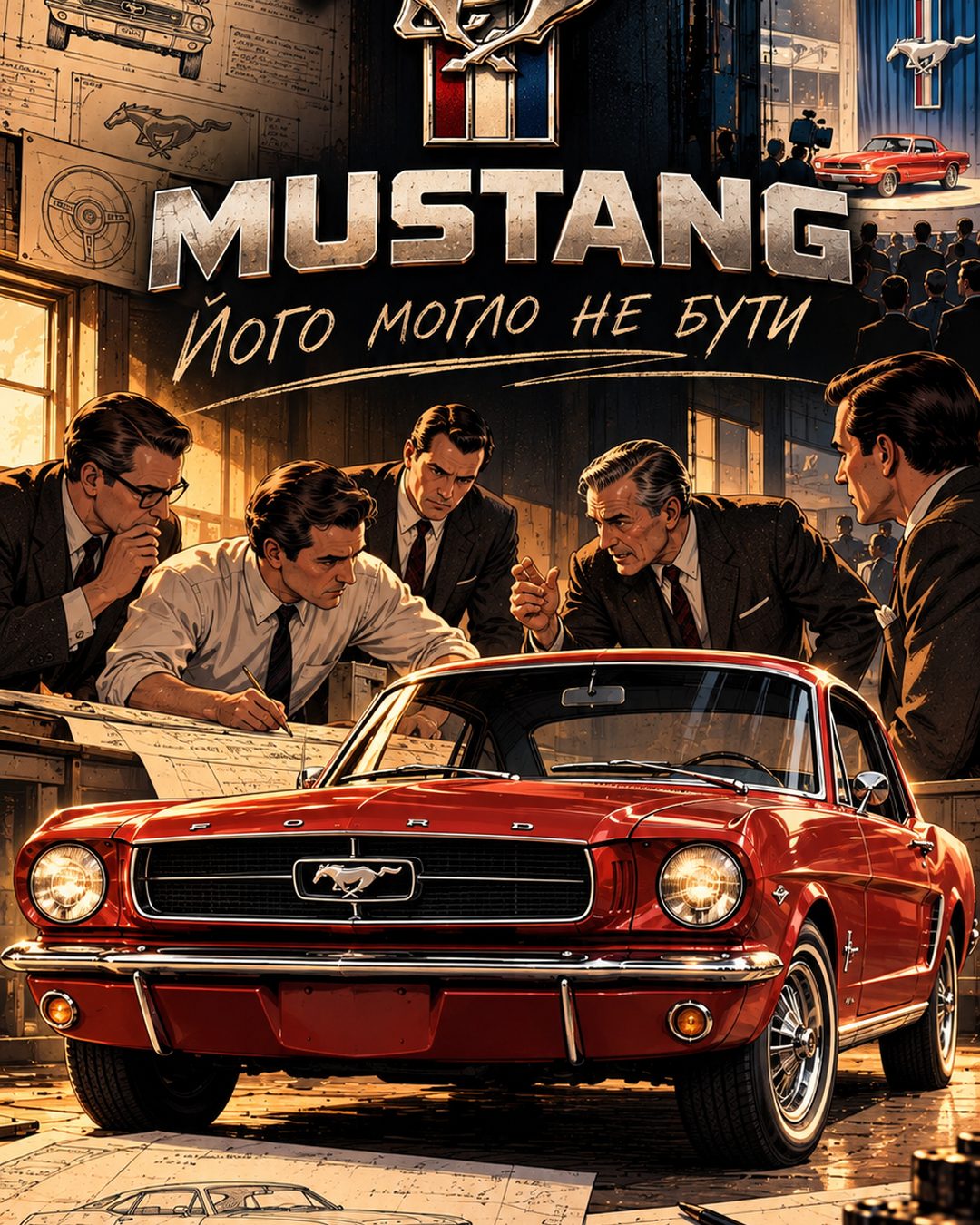
The 1964 Ford Mustang was created by a Ford team led by Lee Iacocca, then general manager of Ford Division. The first Mustang, known as the "1964½" model, debuted in the spring of 1964 at the New York World's Fair. It was built on the mechanicals of the family-oriented Ford Falcon. That kept it affordable and turned it into one of the most successful launches in automotive history.
In this story:
- How the 1964 Mustang became a car buyers fought over
- Why the Ford Mustang almost never happened: the shadow of the Edsel
- Who created the Ford Mustang?
- Was the Mustang based on the Ford Falcon?
- How the first Mustang's design came about
- How Iacocca convinced Henry Ford II
- What were the technical features of the first Ford Mustang?
- How many Mustangs were sold in the first year?
- How the Ford Mustang became a movie star
- Why was Lee Iacocca, the father of the Mustang, fired?
How the 1964 Mustang became a car buyers fought over

Texas, springtime. A man buys a new car and refuses to get out of it. He spends the night right in the car in the middle of the showroom, wrapped in a blanket.
It wasn't that he had nowhere else to sleep. As the story goes, fourteen other buyers wanted that very same car. While the bank was clearing his check, the dealer could have sold it to someone else, so the new owner decided not to go anywhere.
This wasn't a rare Ferrari or a limousine for millionaires. It was a Ford Mustang, a car that just a few years earlier hadn't existed even on paper. And the strangest part is that it might never have been built at all.
We told this story in 3 minutes. Watch how the Mustang was born, then come back for the details that didn't fit into the video.
Why the Ford Mustang almost never happened: the shadow of the Edsel
A few years before the Mustang debuted, Ford suffered one of the most notorious failures in the history of the American auto industry. The Edsel was supposed to be a sensation: an entire new brand with a massive advertising campaign. Instead, it became a laughingstock.
Buyers didn't understand the design, the prices, or the idea itself. Sales collapsed, the brand was shut down after just a few seasons, and losses ran into the hundreds of millions of dollars. In the halls of Ford, the conclusion was simple: no more risky cars.
The problem was that one man at the company thought otherwise.
Who created the Ford Mustang?
That man was Lee Iacocca, the son of Italian immigrants, an engineer by training and a salesman by calling. In the early sixties, he took charge of Ford Division, the company's largest unit. From then on, his focus was on buyers first, while blueprints took a back seat.
He noticed what others had missed. The postwar baby boom generation was growing up. Young Americans had money of their own for the first time, yet they were driving cars that seemed to have been picked by their parents: big, sensible, and boring.
A car that a twenty-year-old guy would see and say, "I want it."
— Iacocca's idea as retold in the "Birth of Car Legends" episode
Iacocca assembled a small informal group. It later became known as the "Fairlane Committee," after the hotel where they met away from the office. The goal sounded simple: a sporty-looking car for young people that could be bought for the price of an ordinary sedan.
But behind that simple goal lay some tough math. An all-new model would have cost far too much, and after the Edsel, no one at the company would have signed that check.
Was the Mustang based on the Ford Falcon?
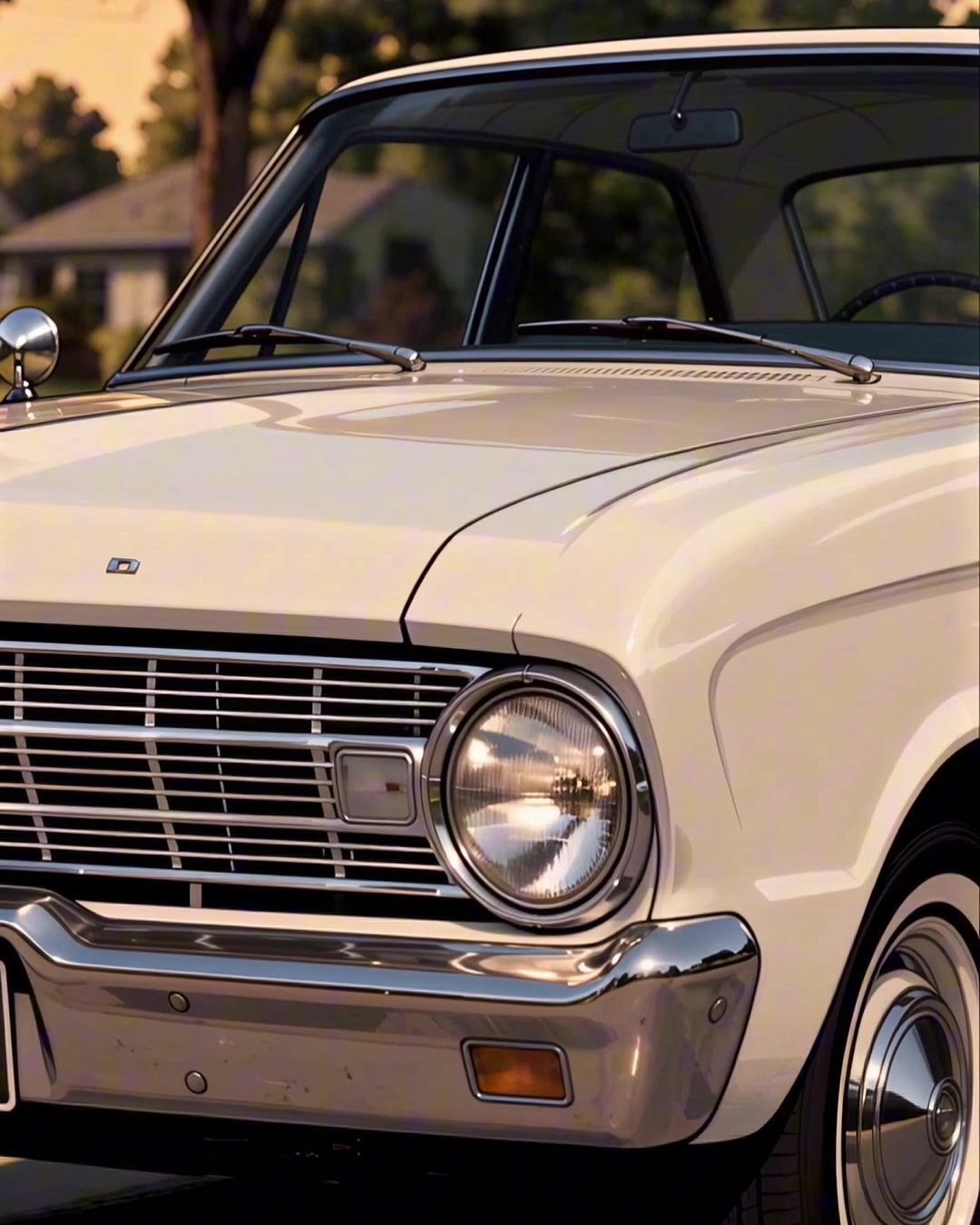
Yes, and that's the key trick of the whole story. Iacocca asked a different question: not "Where can we get more money?" but "What do we already have?" And what Ford had was the compact family Falcon: reliable, cheap, and not the least bit romantic.
The team kept what the buyer barely sees: the engines, transmissions, suspension, and much of the chassis. And they completely changed what the buyer feels: the body, the seating position, the interior, and the mood you get behind the wheel.
How the first Mustang's design came about

The technical foundation came together quickly, but the design was much harder. According to the episode, around eighteen concepts were rejected one after another. Some were too heavy, others too ordinary, and still others looked like just another Falcon.
Then Ford's designers were given one last chance and only a few weeks. The winning proposal came from Joe Oros's studio. That's how the silhouette that's still recognized today was born: a long hood, a short rear deck, and a low stance. These proportions make the car look fast even when it's parked.
Why was the Mustang called the Mustang?
Choosing the name took a long time, and the options included both animals and aircraft. The most common version links the name to the American World War II fighter, the P-51 Mustang. Yet what appeared on the grille wasn't an airplane but a galloping horse. For millions of people, the Mustang became forever the wild horse of the prairies.
How Iacocca convinced Henry Ford II

The hardest part remained: convincing Henry Ford II, the grandson of the company's founder. This was a man who had already once believed in the car of the future and ended up with the Edsel disaster.
According to the episode, Iacocca asked for seventy-five million dollars and got forty-five. For a new model, that wasn't enough. So the Mustang was built from what Ford already had, and it was precisely these constraints that made it affordable. The base price fit a young buyer's wallet.
What were the technical features of the first Ford Mustang?

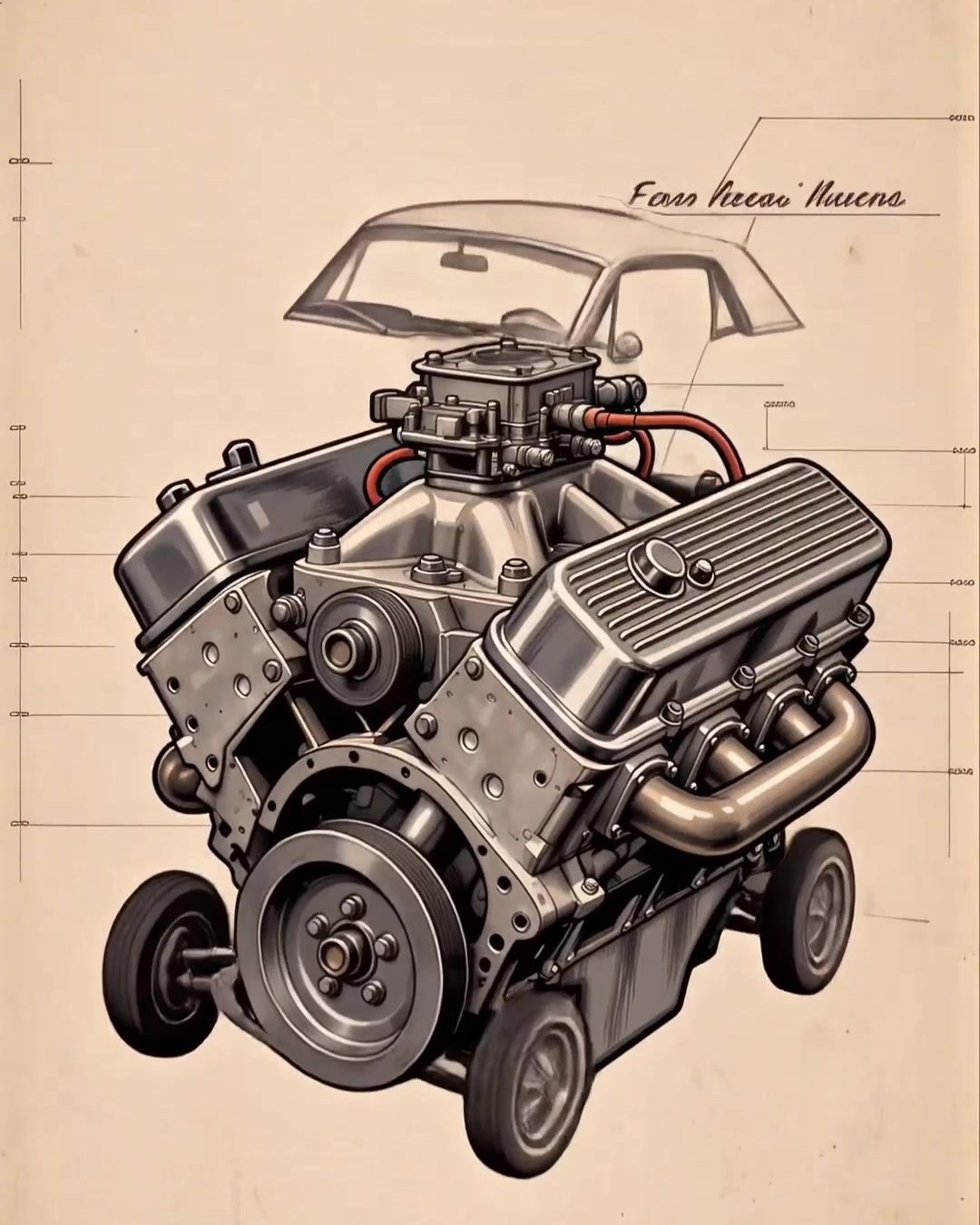
There was no revolution under the hood of the first Mustang, and that was a deliberate choice. The standard engine was a 2.8-liter inline six, with a V8 offered at extra cost. The most powerful version in the first year was a high-performance 4.7-liter 289-series V8.
The real innovation lay in the long list of options. You could get a modest coupe with the six, or you could build an almost sporty car with a V8, a manual transmission, and trim to your taste. One model could take on hundreds of personalities.
Spec sheet
| Parameter | Value |
| Model | Ford Mustang, first generation ("1964½") |
| Debut | April 1964, New York World's Fair |
| Technical basis | Ford Falcon |
| Engines | 2.8 L inline six; 4.3 L and 4.7 L V8 |
| Power | From 101 to 271 hp (per the American standard of the time) |
| Base price | About $2,368 |
| First-year sales | Over 400,000 cars |

How many Mustangs were sold in the first year?
The Mustang went on sale in the spring of 1964. Ford hoped to sell about a hundred thousand cars in a year but sold roughly four times as many. On the first day alone, more than twenty thousand orders came in.
Dealers couldn't keep up. Hence stories like the one from Texas: lines, bidding wars over showroom cars, buyers sleeping at the dealership. In less than two years, the millionth Mustang rolled off the assembly line.
How the Ford Mustang became a movie star

The Mustang quickly moved beyond the showroom. In the very year of its debut, it appeared in "Goldfinger," a James Bond film. Hundreds of films and thousands of TV productions followed.
The real turning point came four years later. In "Bullitt," Steve McQueen raced a dark green Mustang GT through the streets of San Francisco, and that chase changed the way people thought about movie car chases. From then on, car scenes were filmed differently: faster, closer, and for real.

That Texan spent the night in the closed cabin of his new Mustang, and until morning, the air inside was the only air he breathed. Today we spend hours in our cars every day: in traffic jams, on highways, in city dust that gets through the ventilation straight to the passengers.
DEIMAN Hepa Series cabin filters use HEPA-class filter media designed to trap the finest dust before it reaches the cabin. These filters are available for Ford models, from the Focus and Kuga to the Mustang Mach-E.
Hepa Series for Ford: DHF2027 · DHF2010 · DHF2029
Find a DEIMAN filter for your car →
Why was Lee Iacocca, the father of the Mustang, fired?

It seemed like a clear victory. Iacocca became a star and later president of Ford Motor Company. But his relationship with Henry Ford II grew increasingly tense: in a company with the owner's name on the building, there wasn't room for two strong personalities.
Fourteen years after the Mustang's debut, in 1978, Iacocca was called into the office and fired. He moved to Chrysler and pulled that company out of crisis, but that's another story. Iacocca left, but the Mustang stayed.
Timeline
| Year | Event |
| 1957 | Ford launches the Edsel brand, which will become a notorious failure |
| 1959 | Edsel production is wound down |
| 1960 | Lee Iacocca takes charge of Ford Division |
| 1962 | The design of the future Mustang from Joe Oros's studio is approved |
| 1964 | The Mustang debuts at the New York World's Fair, with over 20,000 orders on the first day |
| 1966 | The millionth Mustang rolls off the assembly line |
| 1968 | Release of "Bullitt" with its legendary chase |
| 1978 | Henry Ford II fires Lee Iacocca |
The Mustang came about thanks to constraints. Instead of money, the team had the Falcon's existing mechanicals; instead of room for error, they had the lesson of the Edsel; and they were given only a few weeks for the design. The result was a car buyers slept in dealerships for. Ford is still a family business: the executive chair of the board is Bill Ford, the great-grandson of the company's founder. And the Mustang name is even carried by an electric crossover, the Mustang Mach-E.
Do you drive a Ford too? A modern Ford is very different from the first Mustang, but comfort today depends not only on the engine, suspension, or interior, but also on the air inside the car. In the next episode of "Birth of Car Legends," a new story awaits you about a car that almost didn't happen. And would you buy a Mustang if you had to spend the night at the dealership?
Frequently asked questions
Who created the Ford Mustang?
The Ford Mustang was created by a Ford team led by Lee Iacocca, who at the time headed Ford Division. The design was developed by Joe Oros's studio, and the technical foundation came from the compact Ford Falcon. The final decision and budget were approved by Henry Ford II, grandson of the company's founder. That's why the Mustang is considered a team project, but Iacocca is the one called its mastermind and "father."
When did the first Ford Mustang come out?
The first Ford Mustang was unveiled on April 17, 1964, at the New York World's Fair, and it reached dealers the same day. Because of the early spring debut, these cars are called the "1964½" model: officially they belonged to the 1965 model year, but they came out ahead of the usual schedule.
Why is the 1964 Mustang called the 1964½?
The Mustang came out in the spring of 1964, in the middle of the season rather than in the fall, when a new model year usually began. Formally, the first cars were counted as 1965 models, but enthusiasts singled them out as the "1964½." Early examples have a number of technical differences from later ones, so collectors value them separately.
Why was the Mustang called the Mustang?
The most common version links the name to the American World War II fighter, the P-51 Mustang. Other options were considered when choosing the name, including animal names. However, the grille featured a galloping horse emblem, so for most buyers the Mustang is associated with the wild horse of the American prairies, a symbol of freedom and speed.
Was the Mustang based on the Ford Falcon?
Yes. To stay within a limited budget, Iacocca's team used the mechanicals of the compact family Ford Falcon: the engines, transmissions, suspension, and much of the chassis. What was new was the body, the interior, and the proportions with a long hood and a short rear deck. That's exactly why the Mustang was cheap to produce and affordable for young buyers.
What engine did the first Ford Mustang have?
The base 1964 Mustang had a 2.8-liter inline six-cylinder engine producing about 101 hp. For extra cost, 4.3- and 4.7-liter V8 engines were offered. The most powerful version in the first year was a high-performance 4.7-liter 289-series V8 rated at 271 hp per the American standard of the time.
How much did the first Ford Mustang cost?
The base price of the first Ford Mustang was about $2,368. This was Lee Iacocca's deliberate strategy: a sporty-looking car for the price of an ordinary compact sedan. Thanks to the long list of options, the final price could be considerably higher, but the entry ticket remained affordable for young Americans.
How many Ford Mustangs were sold in the first year?
Ford expected to sell about 100,000 Mustangs in the first year but sold more than 400,000, roughly four times as many. On the first day alone, more than 22,000 orders came in. The millionth Mustang rolled off the assembly line in March 1966, less than two years after its debut.
What is the Ford Edsel and how is it connected to the Mustang?
Edsel was a new Ford brand launched in the late 1950s. It failed in the market and cost the company hundreds of millions of dollars in losses. Afterward, Ford's leadership was wary of risky projects, so Iacocca had to persuade Henry Ford II and settle for a more modest budget. That's why the Mustang was built on Falcon mechanicals.
Why did Henry Ford II fire Lee Iacocca?
Lee Iacocca was fired in 1978, when he was president of Ford Motor Company. No detailed official reasons were given. The dismissal is usually attributed to a personal conflict and a struggle for influence between Iacocca and Henry Ford II. After being fired, Iacocca took the helm at Chrysler and helped the company survive a crisis.
What movie featured the Ford Mustang?
The Mustang's most famous movie role is in the 1968 film "Bullitt," in which Steve McQueen drives a dark green Mustang GT in a chase through the streets of San Francisco. That scene changed the way car chases were filmed. Even earlier, in the year of its debut, the Mustang appeared in the Bond film "Goldfinger." In total, the car has appeared in hundreds of movies and TV series.