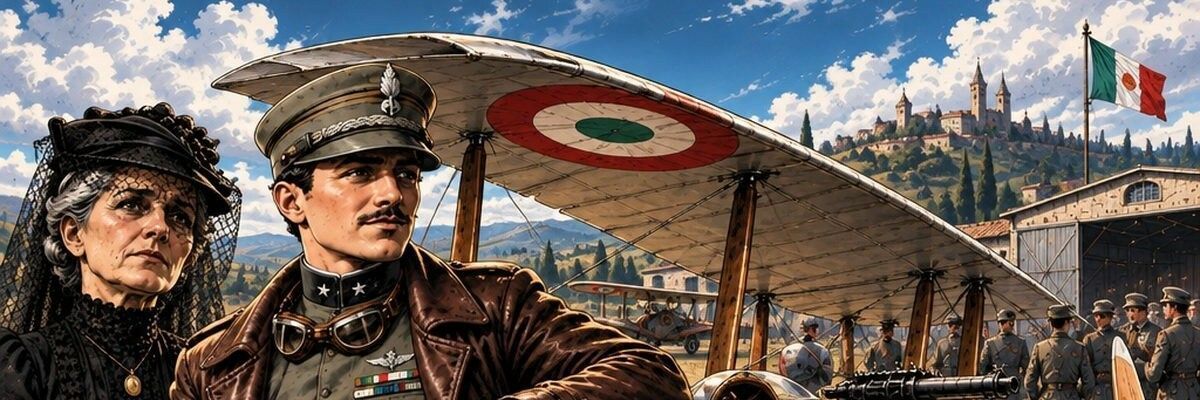
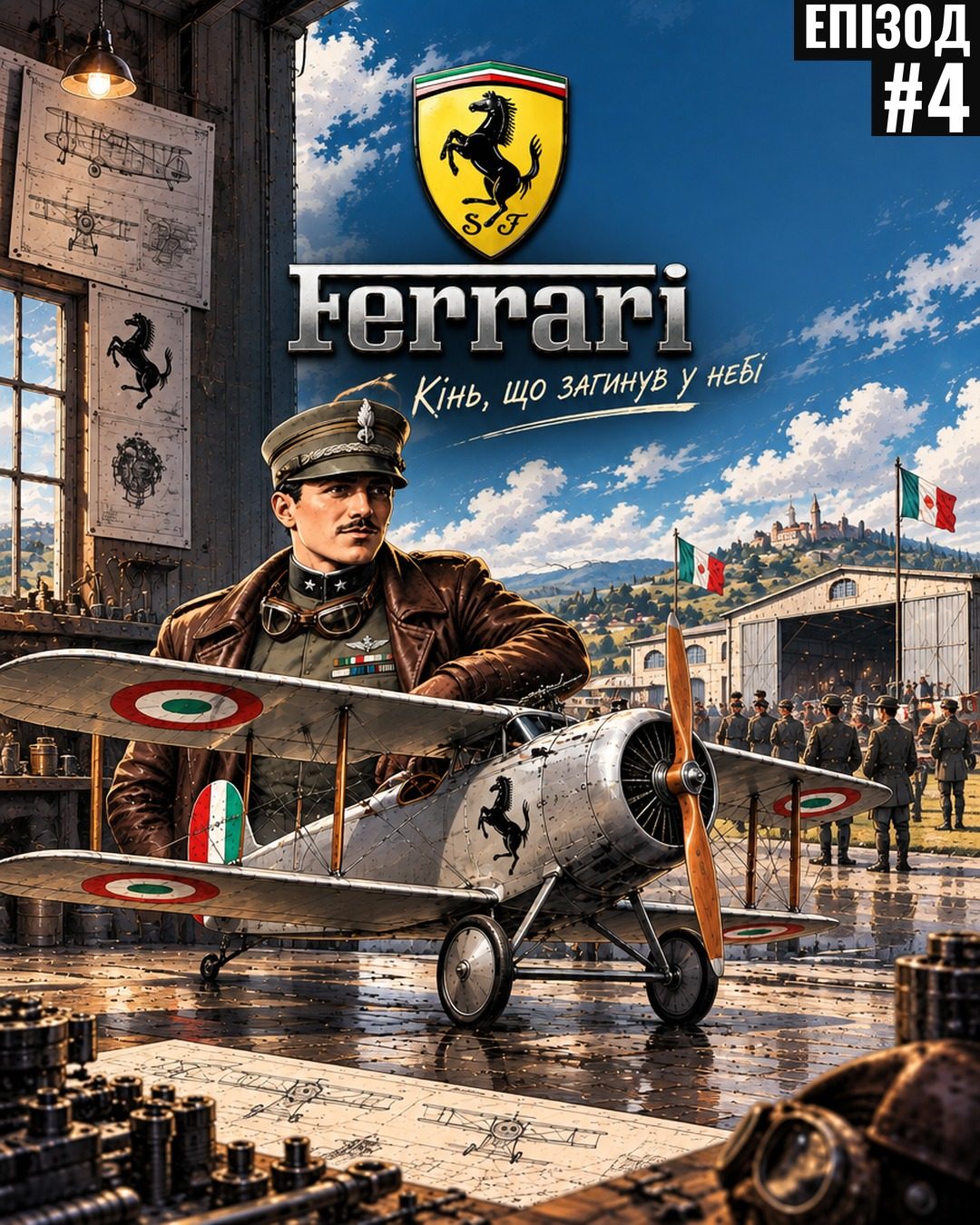
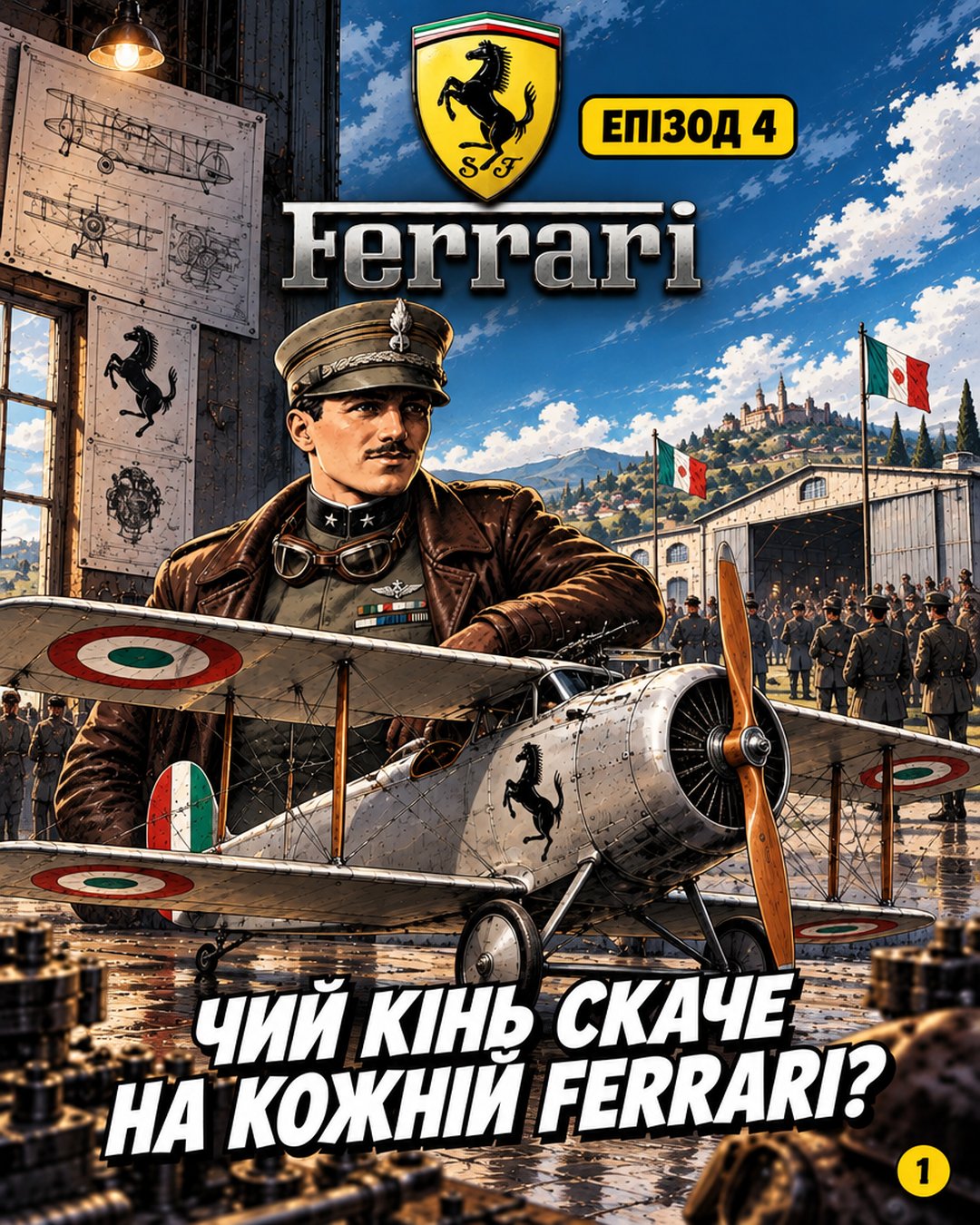
The horse on the Ferrari logo is the personal emblem of Francesco Baracca, Italy's top-scoring fighter pilot of World War I. Baracca painted a black prancing horse on the side of his fighter plane and was killed in the final year of the war. In 1923, his parents, Count and Countess Baracca, met a young racing driver named Enzo Ferrari. According to Enzo himself, the countess asked him to put her son's horse on his cars because it would bring him luck. Enzo added a yellow background, the color of his native Modena, and so the Cavallino Rampante emblem was born.
In this story:
- Where did the horse on the Ferrari logo come from?
- Who was Francesco Baracca?
- How many planes did Baracca shoot down, and why was he called the ace of aces?
- How did Francesco Baracca die?
- How did Baracca's horse end up with Enzo Ferrari?
- Why is the Ferrari horse black and the background yellow?
- What happened to the Ferrari horse next?
Where did the horse on the Ferrari logo come from?
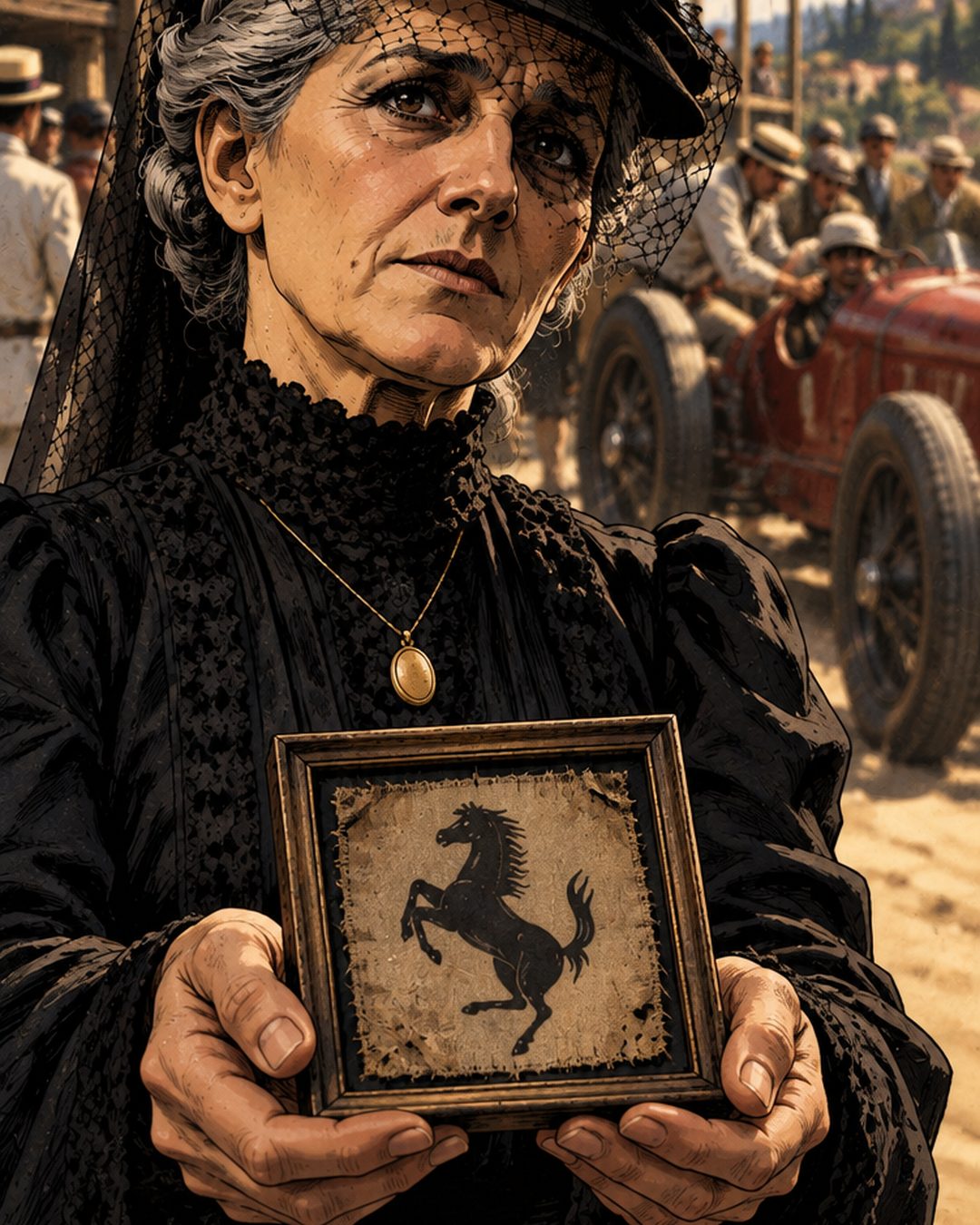
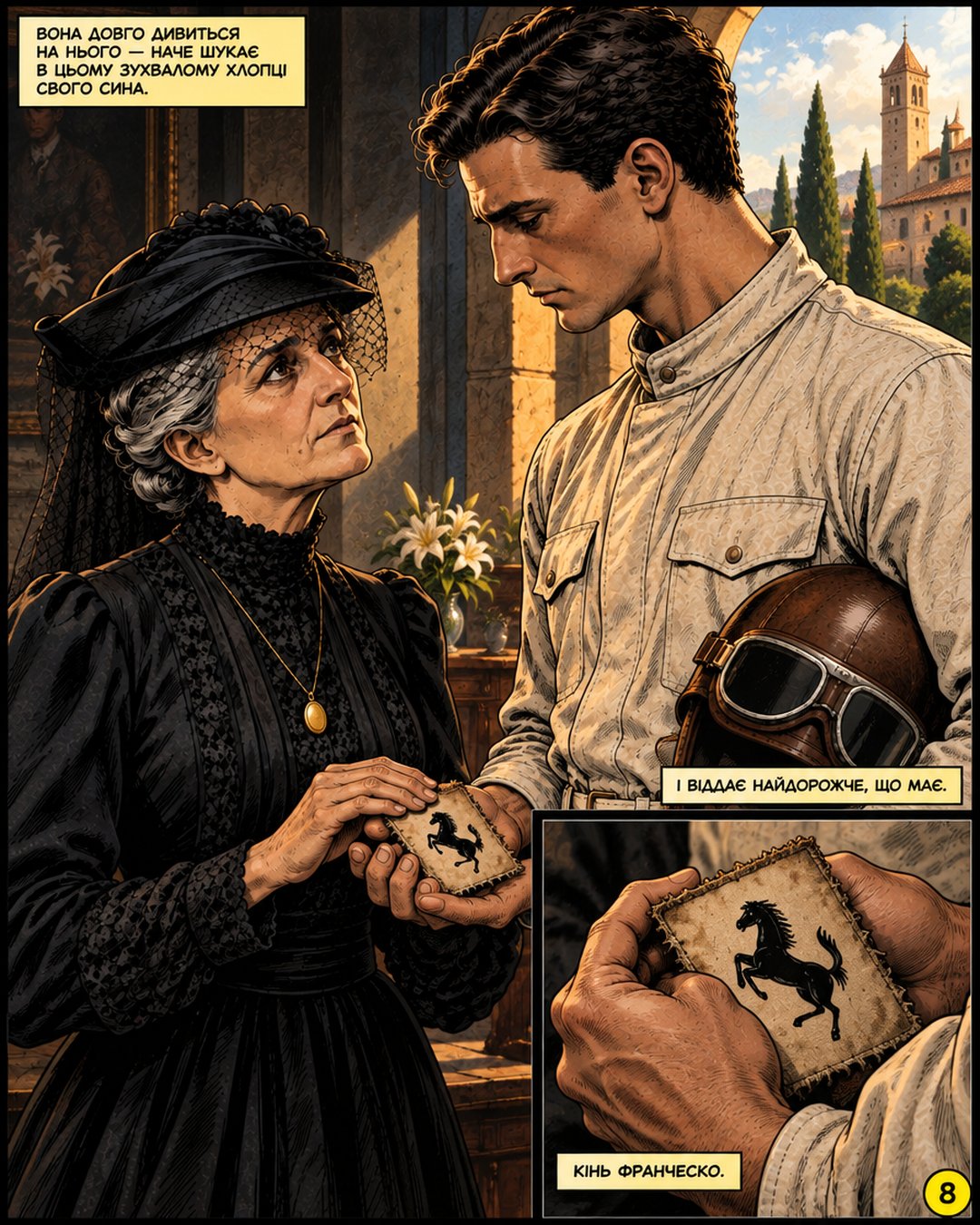
This story begins with a woman in black. An elderly countess stands beside a racetrack, gazing for a long time at a dust-covered young man who has just won. Then she offers him the most precious thing she has left: the memory of her son.
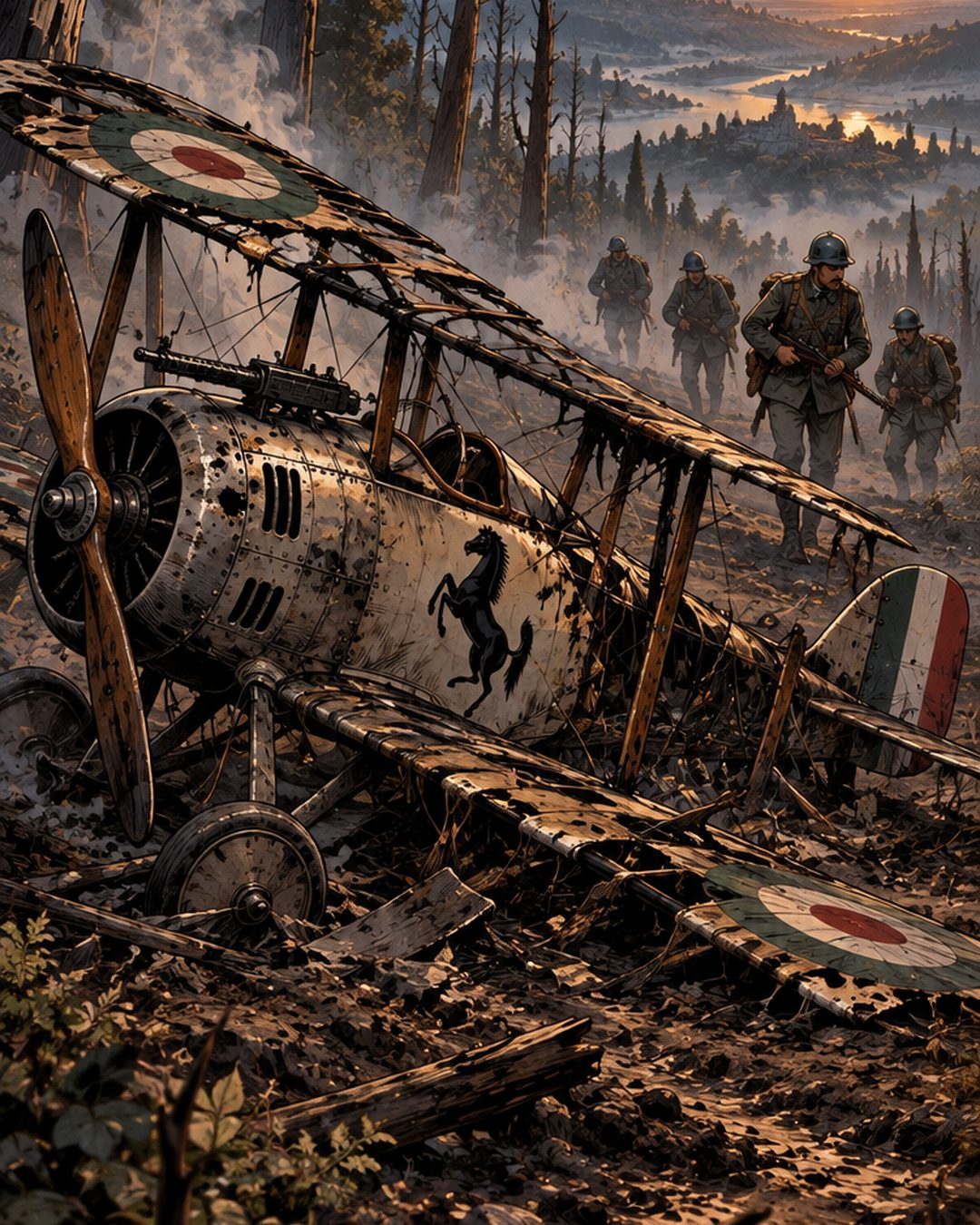
Five years before that meeting, on the Montello hill in northeastern Italy, soldiers found a wrecked biplane. It was still smoldering among the trees. On a surviving piece of the fuselage, a black horse rearing on its hind legs was still visible. Today, that horse is on every Ferrari.
We told this story in 3 minutes in the "Birth of Car Legends" episode — watch how the horse flew from the sky onto the hood.
Who was Francesco Baracca?
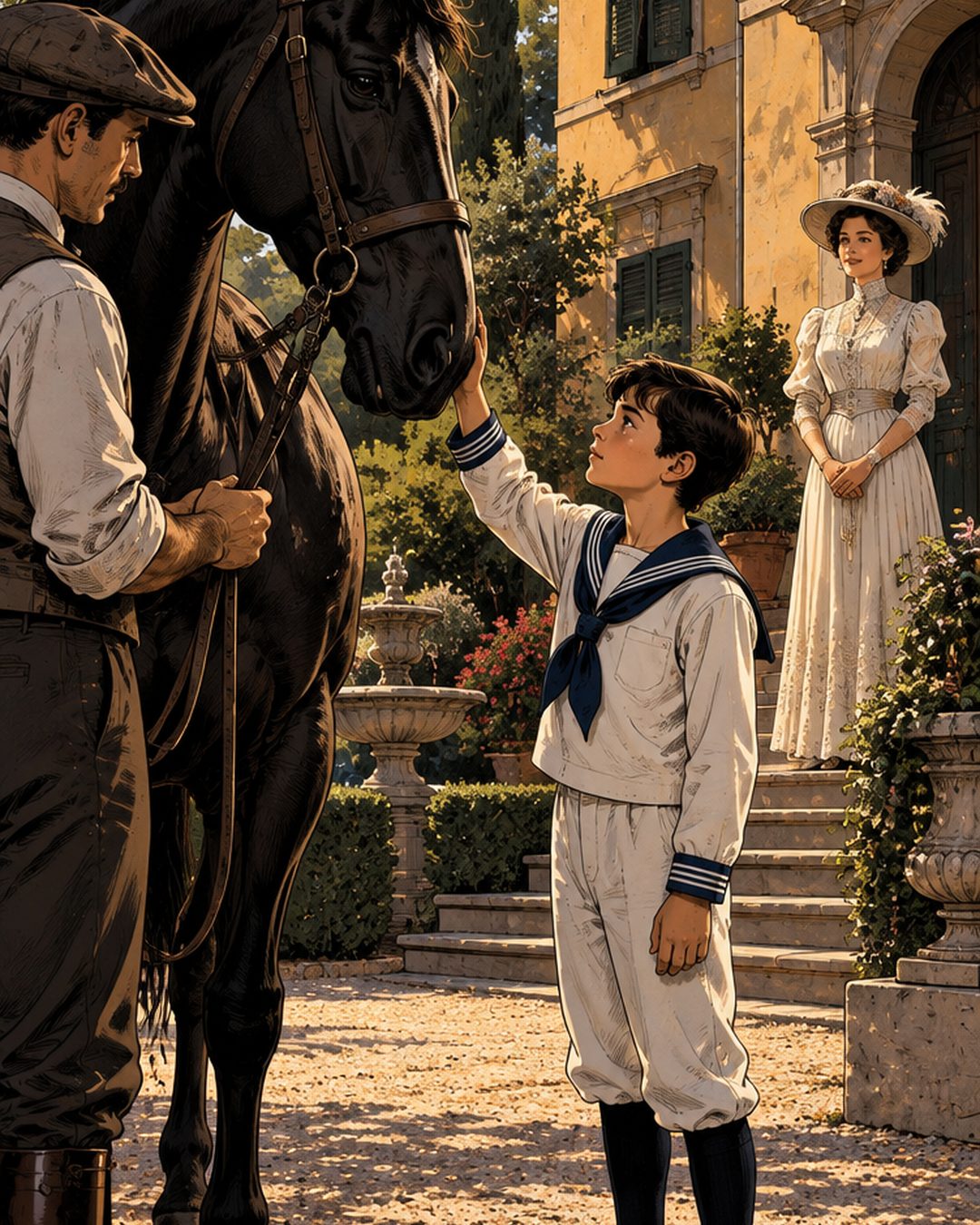
Francesco Baracca was born in Lugo, a small town in Romagna, into a wealthy family. As a boy, what he loved most were horses. Not cars, not planes, but horses: living, spirited, headstrong.
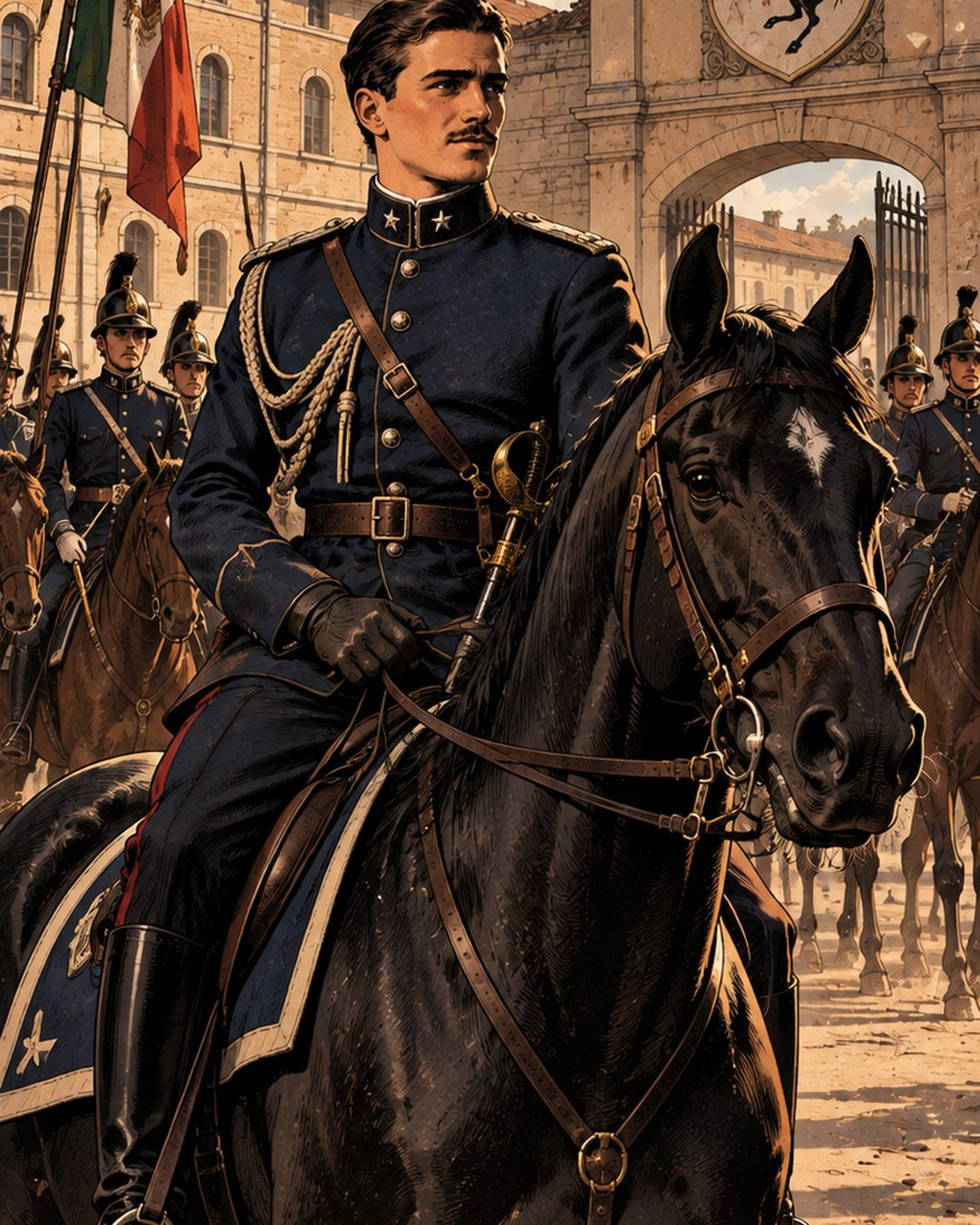
At twenty-two, he became an officer in the Piemonte Reale cavalry regiment, one of the oldest in the Italian army. The horse on the regiment's coat of arms was his pride. It seemed that what lay ahead was the ordinary career of a dashing cavalryman: parades, riding arenas, polished boots.
Why did a cavalryman switch to an airplane?
Then World War I came, and it turned out that cavalry decided almost nothing in this new kind of war. Machine guns mowed down horses along with their riders. Baracca made a choice that seemed insane at the time: he traded the saddle for an airplane made of wood and canvas.
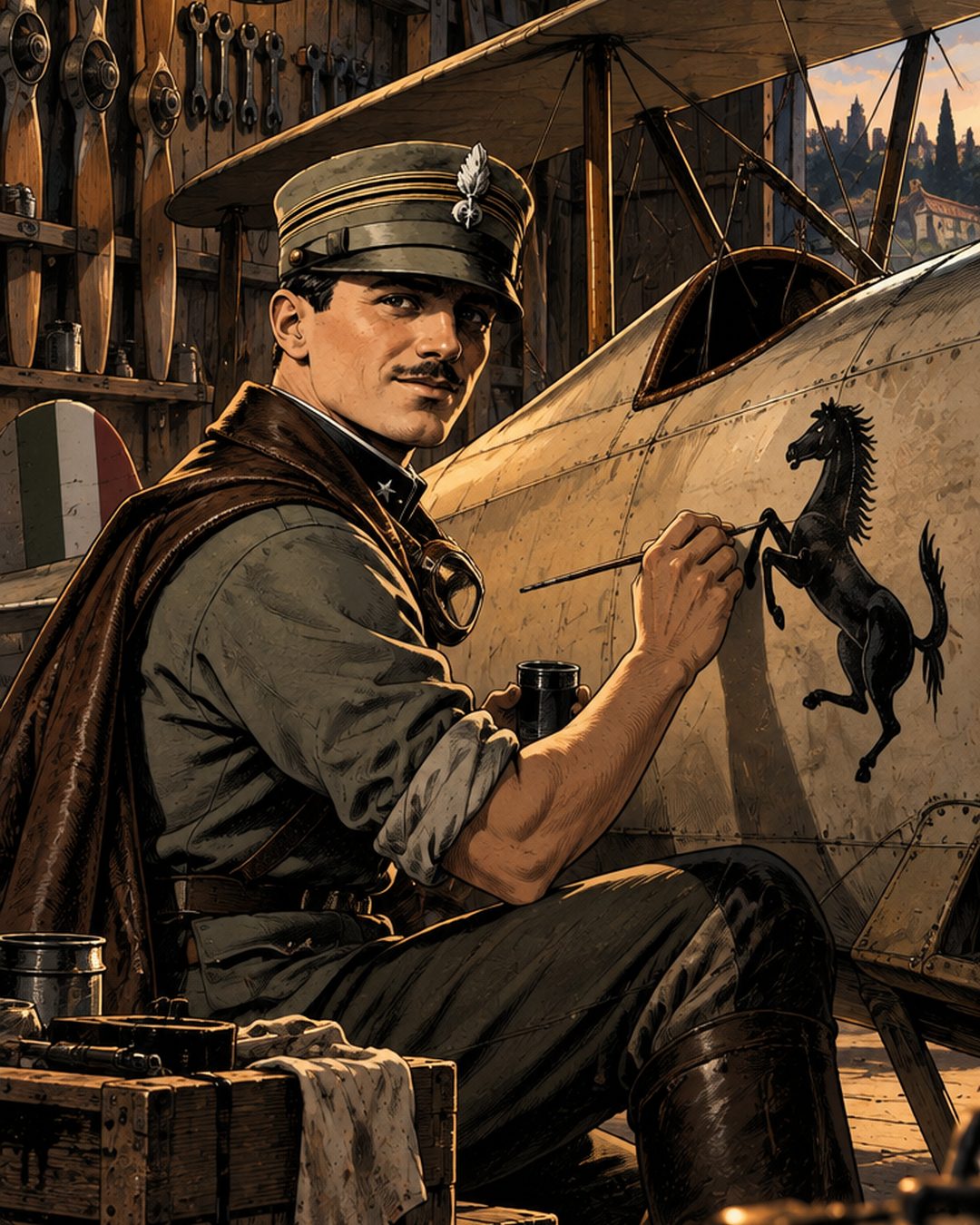
Perhaps he wanted to prove to himself that he was more than just a rich man's son. Perhaps he was simply looking for a new kind of speed. But on the side of his fighter, he painted that same horse: black, rearing on its hind legs.
How many planes did Baracca shoot down, and why was he called the ace of aces?
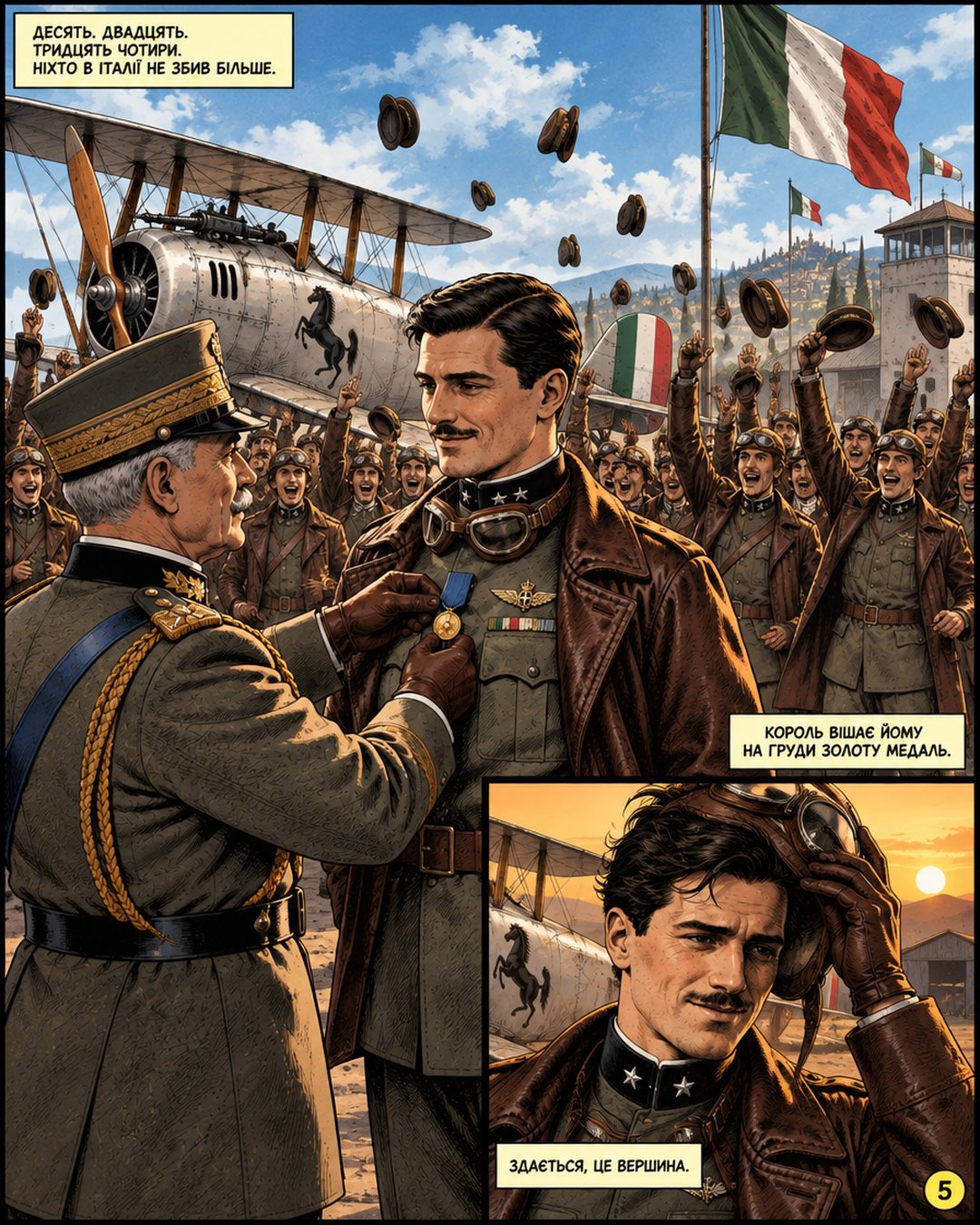
Baracca scored his first aerial victory in the spring of Italy's second year of war. It was one of the first victories of Italian aviation. Then the horse began to hunt: ten, twenty, thirty-four planes shot down. No Italian pilot in that war surpassed this record.
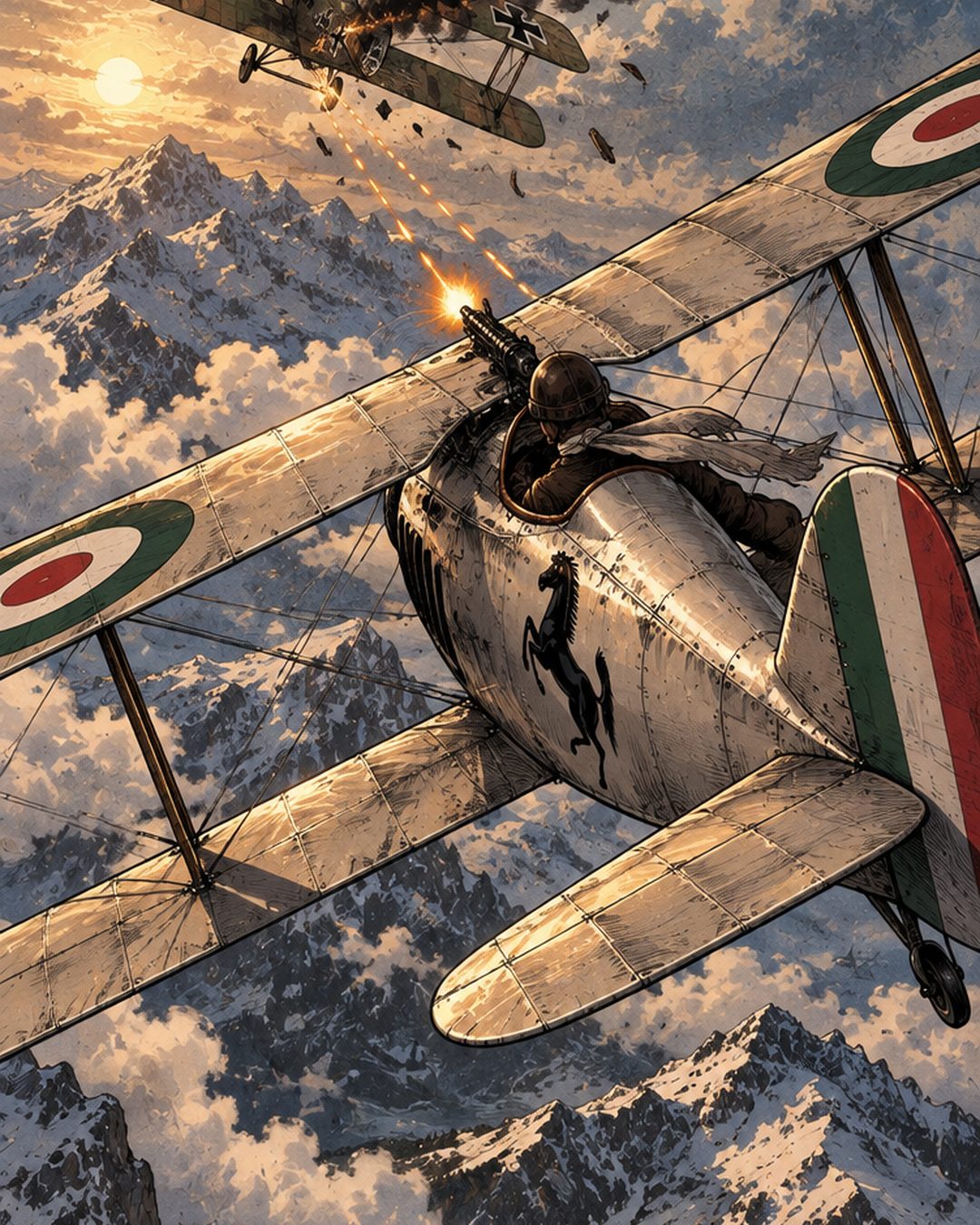
He was assigned to the 91st Squadriglia, which became known in Italy as the "Squadron of Aces." Baracca became its commander and received the country's highest military decoration — the Gold Medal of Military Valor. Newspapers called him the "ace of aces." It seemed to be the pinnacle.

How did Francesco Baracca die?
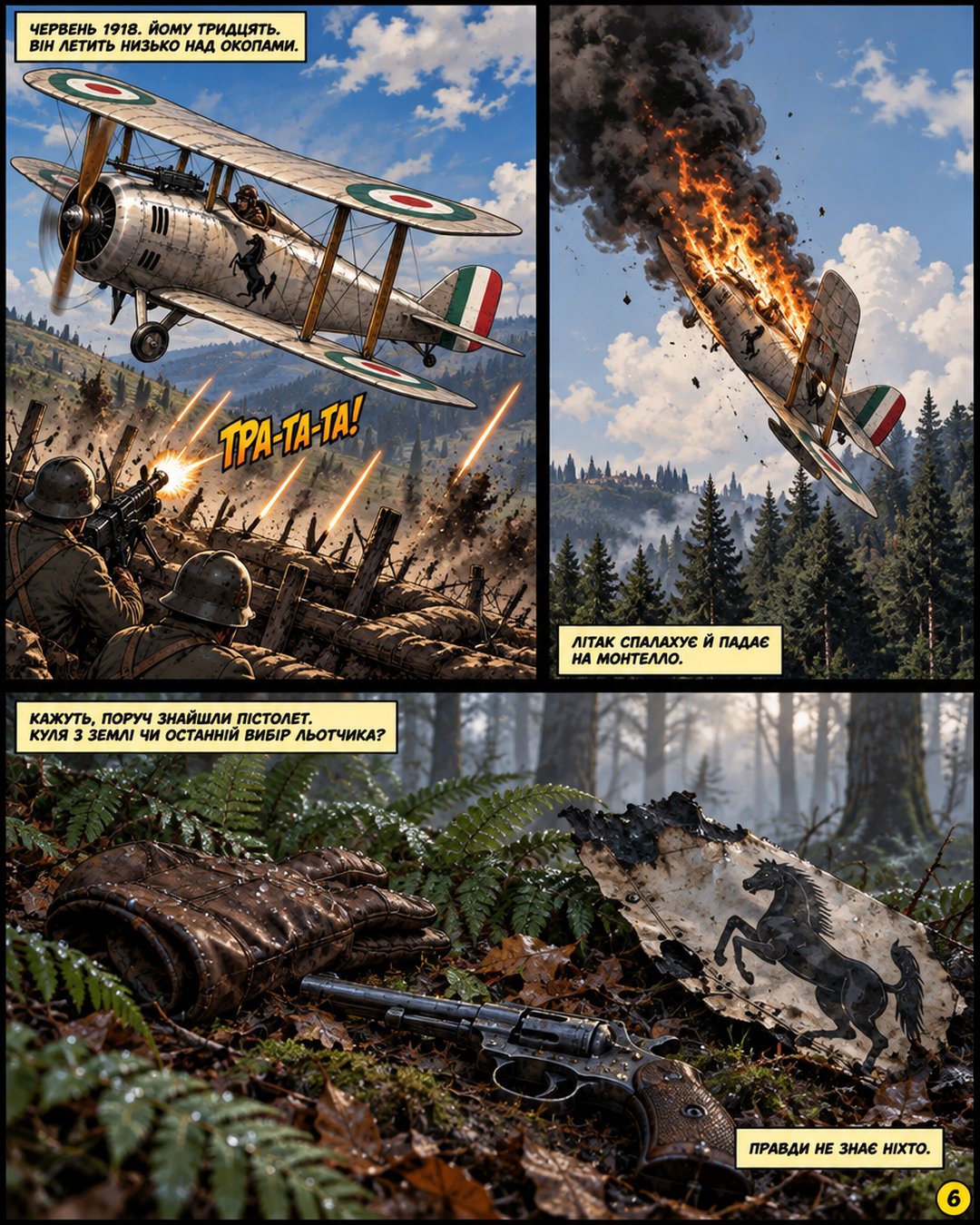
June, the final year of the war. He is thirty. Baracca is flying low over the Austrian trenches on the Montello, supporting the infantry. A machine gun opens fire from the ground. The plane bursts into flames and crashes into the forest.
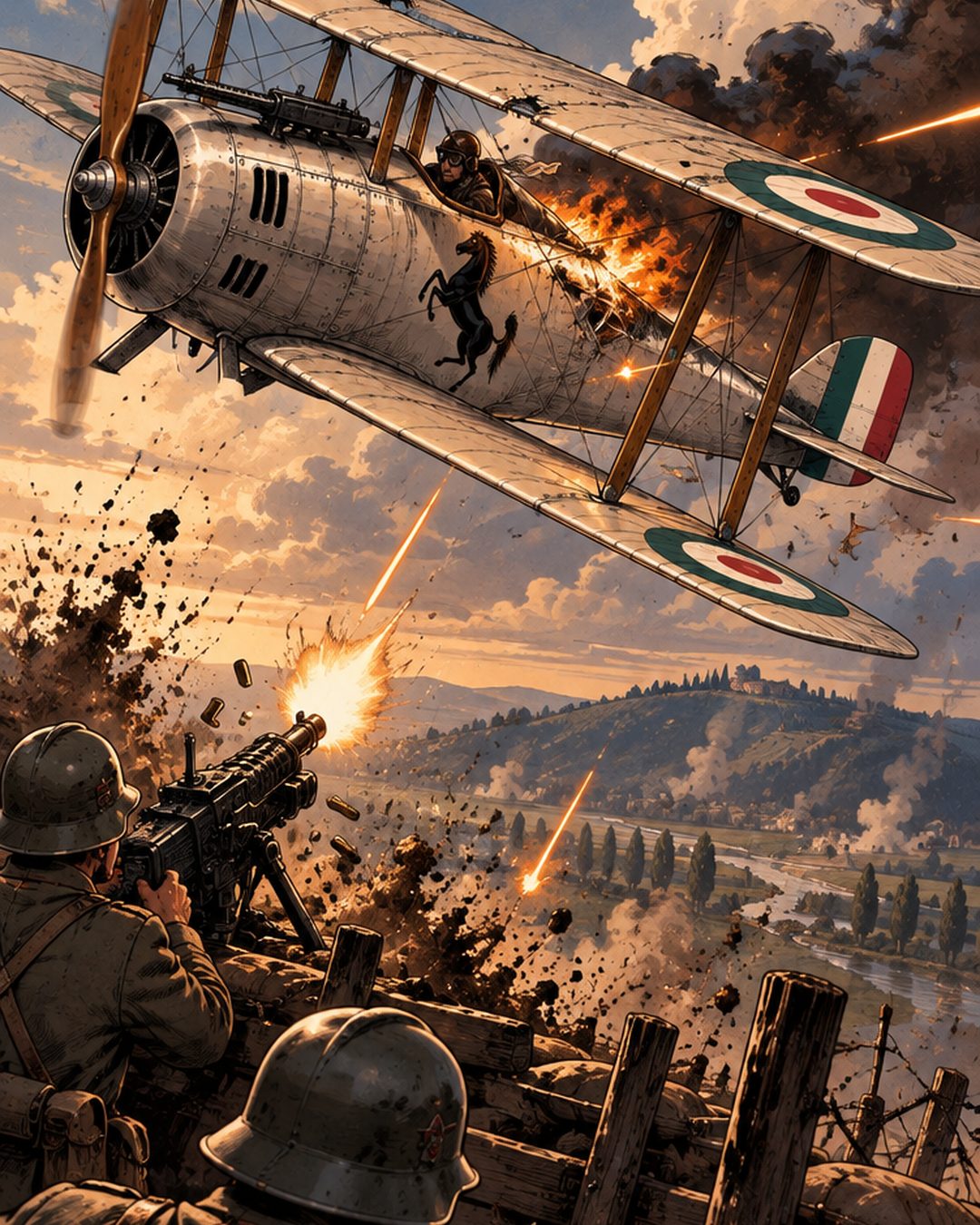
His body was found only several days later. It is said that a pistol lay nearby and that there was a gunshot wound to his head. A bullet from the ground, or the final choice of a pilot who didn't want to burn alive? No one knows the truth, and this mystery still divides historians.
How did Baracca's horse end up with Enzo Ferrari?
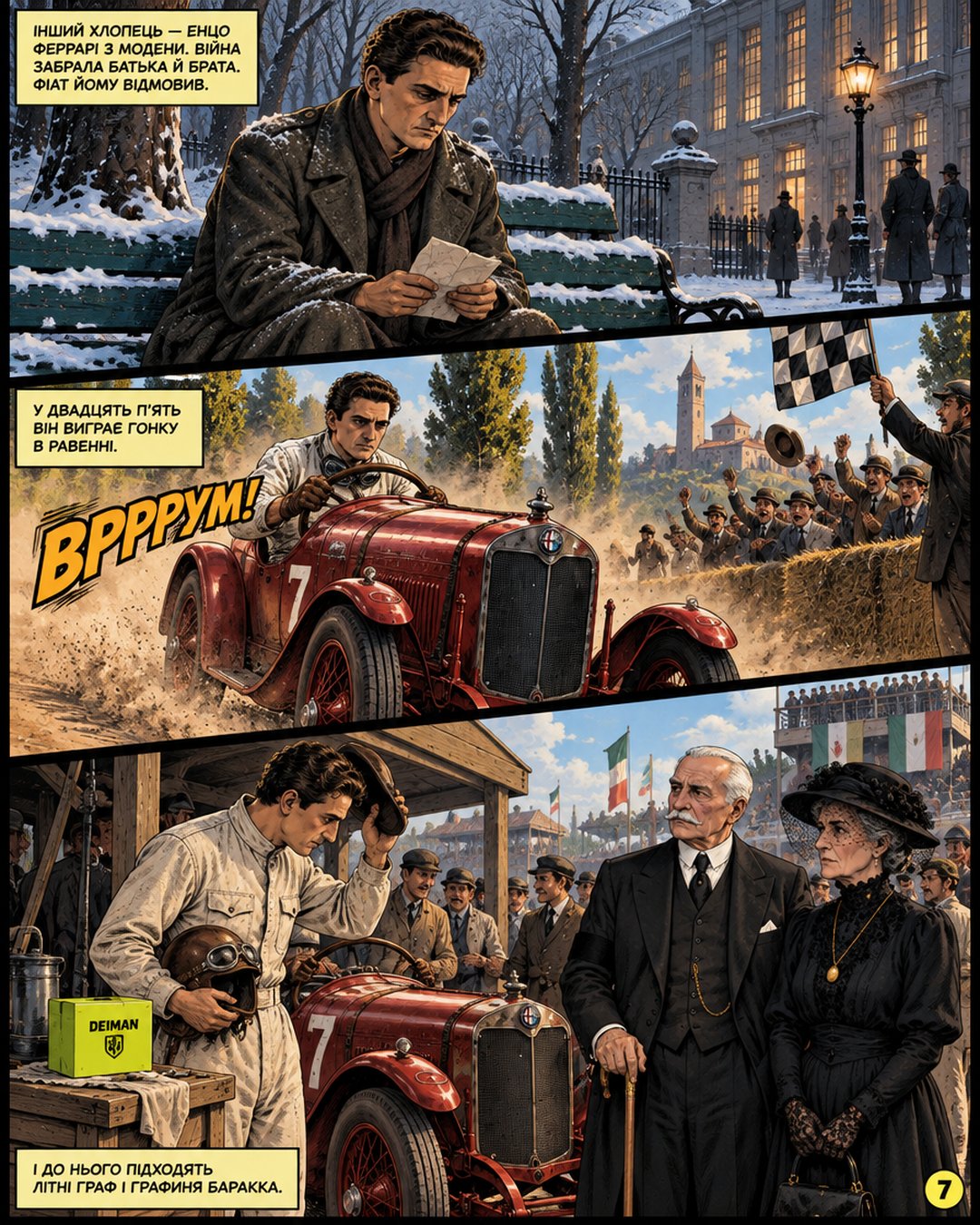
Now to another young man — Enzo Ferrari from Modena. He was ten years younger than Baracca, and the war had been no less cruel to him: it took his father and his older brother. After returning home, Enzo went to Turin to ask for a job at Fiat. He was turned down.
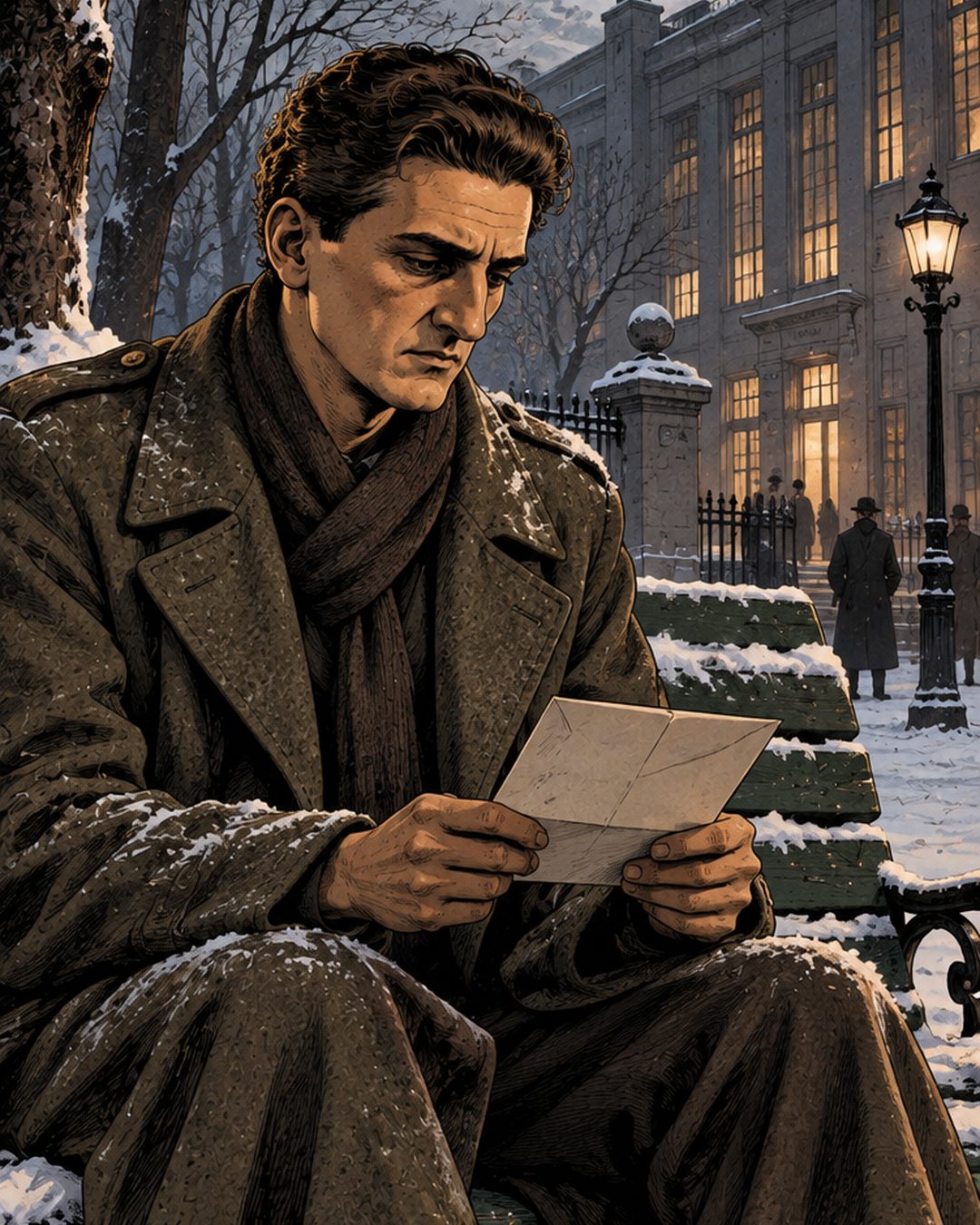
All he had left was speed. Enzo became a racing driver, and later a driver for Alfa Romeo. At twenty-five, he won a race on the Savio circuit near Ravenna. After the finish, an elderly couple approached him: Count Enrico and Countess Paolina Baracca.
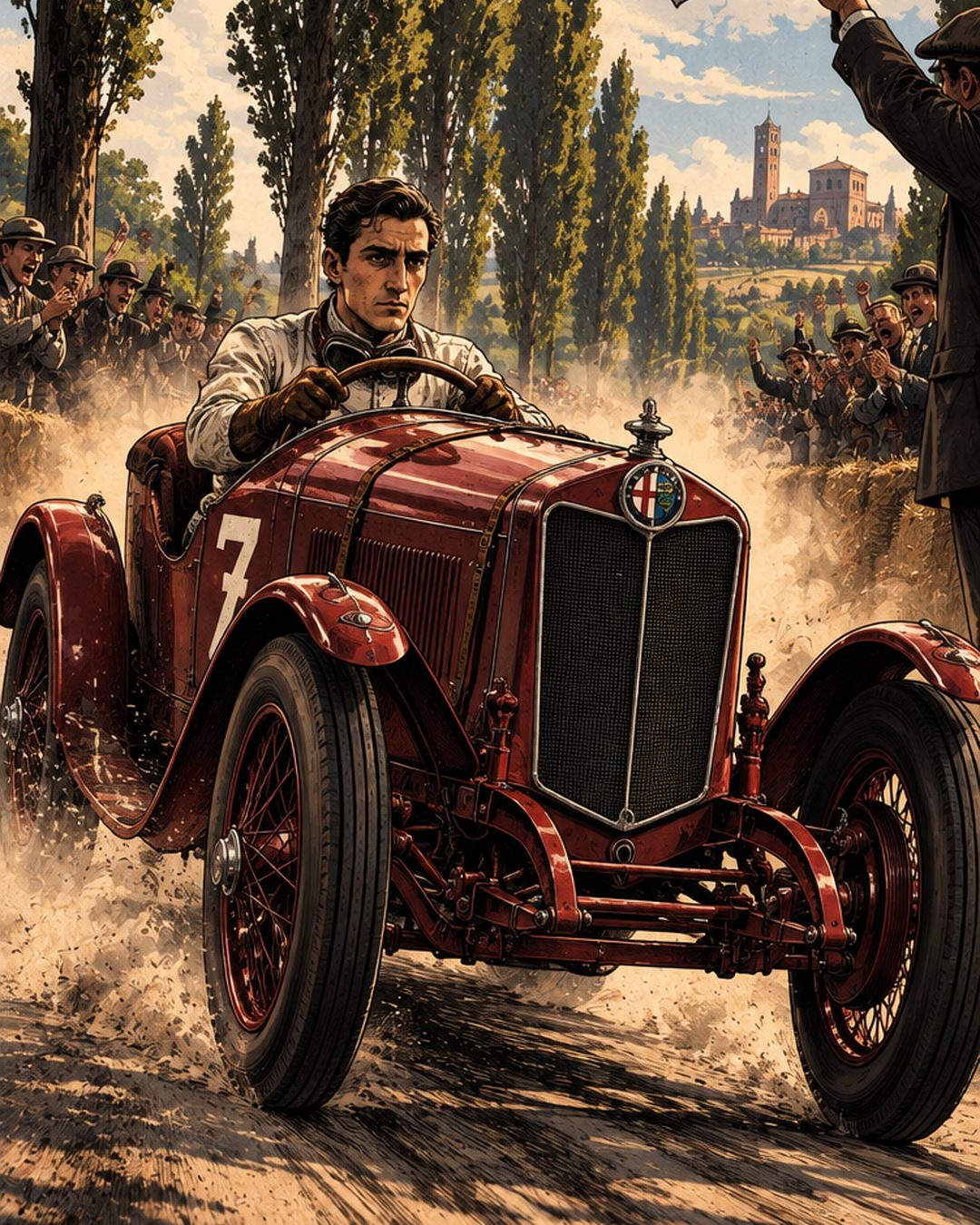
Ferrari, put my son's horse on your cars. It will bring you luck.
— according to Enzo Ferrari's recollections, this is what Countess Paolina Baracca told him
The countess studied his face for a long time, as if searching for her son in this bold young man. There are no documents recording this conversation, only Enzo's own account, but it is precisely this account that became the legend every Ferrari fan knows.

Why is the Ferrari horse black and the background yellow?
For nine years, Enzo didn't dare. It was as if he feared he hadn't earned it yet. Only after he had assembled his own team, Scuderia Ferrari, which entered Alfa Romeo cars in races, did the horse appear on a hood. That happened at the 24-hour race at Spa, Belgium, in 1932.
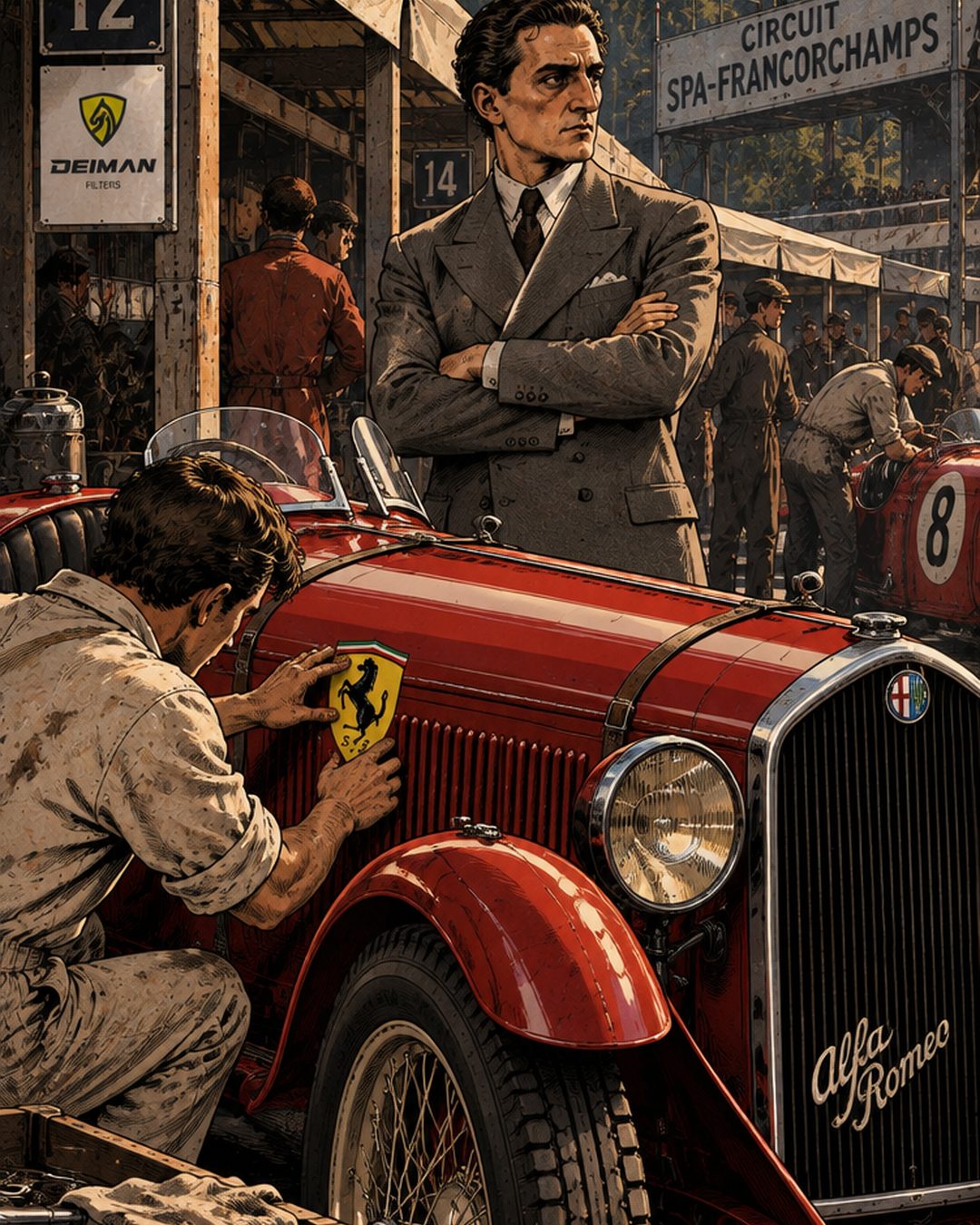
The horse remained black, as on Baracca's plane, as a sign of mourning for the pilot. Enzo added a yellow background — the color of Modena's coat of arms. At the top, stripes of the Italian tricolor appeared. And the tail changed too: on Baracca's horse it points down, on Ferrari's it is raised up.
Emblem fact sheet
| Parameter | Value |
| Name | Cavallino Rampante — "prancing horse" |
| First owner | Francesco Baracca, ace of the 91st Squadriglia |
| Where it first appeared | On the sides of Baracca's fighter planes |
| Handed to Enzo Ferrari | 1923, after a race on the Savio circuit near Ravenna |
| Debut on a car | 1932, 24 Hours of Spa, Scuderia Ferrari Alfa Romeo |
| What Enzo added | Yellow background (the color of Modena), tricolor, raised tail |

After the race on the Savio circuit, Enzo climbed out of the car gray with dust: an open cockpit, no glass at all, and the driver breathed the same air as the engine. Today the cabin is enclosed, but dust, exhaust and pollen from the road still look for a way inside.
Standing between them and the passengers is the Multilayer Series — a DEIMAN multilayer cabin air filter, in which several layers of material trap whatever the oncoming airflow carries in. Filters from this series are already available for Fiat, the brand Enzo's fate was intertwined with.
Multilayer Series for Fiat: DMF2072
Find a DEIMAN filter for your car →
What happened to the Ferrari horse next?
With this horse, Enzo outlived almost all of his rivals and his own son Dino, who died young of a serious illness. In time, the Scuderia became an independent brand, and the horse moved onto the hoods of cars that Enzo now built under his own name.
And one day, a tractor manufacturer would come to him to complain about a clutch. Enzo would respond dismissively, and so a bull would be born that would charge at this horse.

Timeline
| Year | Event |
| 1888 | Francesco Baracca is born in Lugo |
| 1898 | Enzo Ferrari is born in Modena |
| 1916 | Baracca scores his first aerial victory |
| 1918 | Baracca dies on the Montello hill with 34 victories to his name |
| 1923 | Enzo wins a race in Ravenna and receives the horse from the Baracca family |
| 1929 | Enzo founds Scuderia Ferrari |
| 1932 | The horse first appears on Scuderia cars at Spa |
Today Baracca's plane hangs in a quiet museum in Lugo, while his horse races all over the world — on cars that millions dream of. Enzo himself lost full control of his company during his lifetime: in the late 1960s he sold half of it to Fiat, keeping the racing team for himself, and after his death control passed to the group. But the horse stayed the same: black, like a mother's mourning.
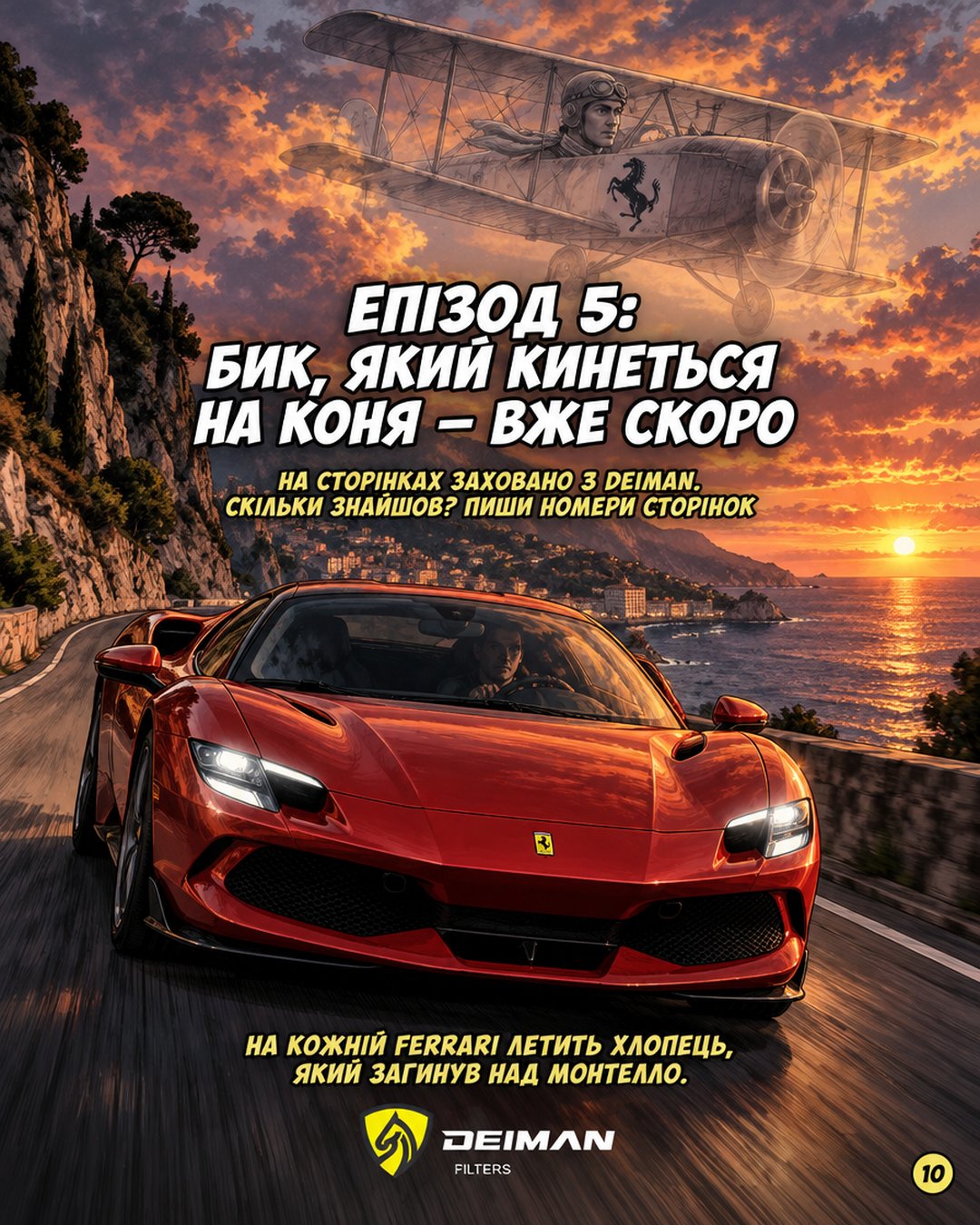
On every Ferrari flies the young man who died over the Montello. The next episode is about the bull that charged at this horse, and it's coming out very soon. And what do you think: why did Enzo wait a full nine years before putting the horse on a hood?
The whole story as a comic
10 pages — click to view them full size.



Frequently asked questions
Why is there a horse on the Ferrari logo?
The horse on the Ferrari logo is the emblem of Italian pilot Francesco Baracca, a World War I ace. He painted a black prancing horse on his fighter plane. After his death, the pilot's parents met Enzo Ferrari, and according to Enzo, Baracca's mother asked him to put her son's horse on his cars for luck.
Who was Francesco Baracca?
Francesco Baracca was an Italian military pilot from Lugo and Italy's top-scoring ace of World War I. He started out as a cavalryman in the Piemonte Reale regiment, then moved to aviation, commanded the 91st Squadriglia and received the Gold Medal of Military Valor. He died in June 1918 on the Montello hill.
How many planes did Francesco Baracca shoot down?
Francesco Baracca is credited with 34 aerial victories. This is the best record among Italian pilots of World War I, which is why he was called the "ace of aces." He scored most of his victories in French-built Nieuport and SPAD fighters, which had a black prancing horse painted on their sides.
How did Francesco Baracca die?
Baracca died on June 19, 1918, during a ground-attack mission over the trenches on the Montello hill. His plane caught fire and crashed into the forest. His body was found several days later, and according to accounts, a pistol lay nearby. It is still unknown whether the pilot was killed by a bullet from the ground or shot himself to avoid burning alive.
When did Enzo Ferrari receive Baracca's horse?
It happened in 1923, after 25-year-old Enzo Ferrari won a race on the Savio circuit near Ravenna. There he met Baracca's parents — Count Enrico and Countess Paolina. We know the whole story of the conversation only from Enzo's own recollections; there is no documentary evidence of her words.
When did the horse first appear on a Ferrari car?
The horse first appeared on race cars in 1932, at the 24-hour race at Spa, Belgium. At the time, Scuderia Ferrari was entering Alfa Romeo cars, and it was these that the yellow shield with the black horse first adorned. Nine years passed between the meeting with the Baracca family and this debut.
Why is the background of the Ferrari logo yellow?
Yellow is the color of the coat of arms of Modena, Enzo Ferrari's hometown. The horse itself remained black, as on Baracca's plane, in memory of the fallen pilot. At the top, Enzo added stripes of the Italian tricolor. This is how a pilot's personal emblem became the symbol of a racing team, and later of a car brand.
How does the Ferrari horse differ from Baracca's horse?
The main difference is the tail. On Baracca's plane, the horse held its tail down, while on the Ferrari logo the tail is raised. In addition, Enzo added a yellow background in Modena's color and stripes of the Italian flag. The horse's rearing pose on its hind legs and its black color remained unchanged.
Is the Ferrari horse related to the Porsche horse?
There is no direct connection. The Porsche horse comes from the coat of arms of Stuttgart, while the Ferrari horse comes from Francesco Baracca's emblem. There is a theory that Baracca borrowed the horse from a German plane whose pilot was from Stuttgart, but it has not been confirmed. More often, the origin of his emblem is linked to the cavalry regiment he served in.
Where is Francesco Baracca's plane now?
Francesco Baracca's SPAD fighter is kept in the museum named after him in Lugo, the pilot's hometown in Romagna. A memorial in his honor stands on the Montello hill, where he died. So the horse lives in two places at once: in a quiet museum and on every Ferrari that leaves the factory in Maranello.